.svg)


.svg)
.svg)
.svg)
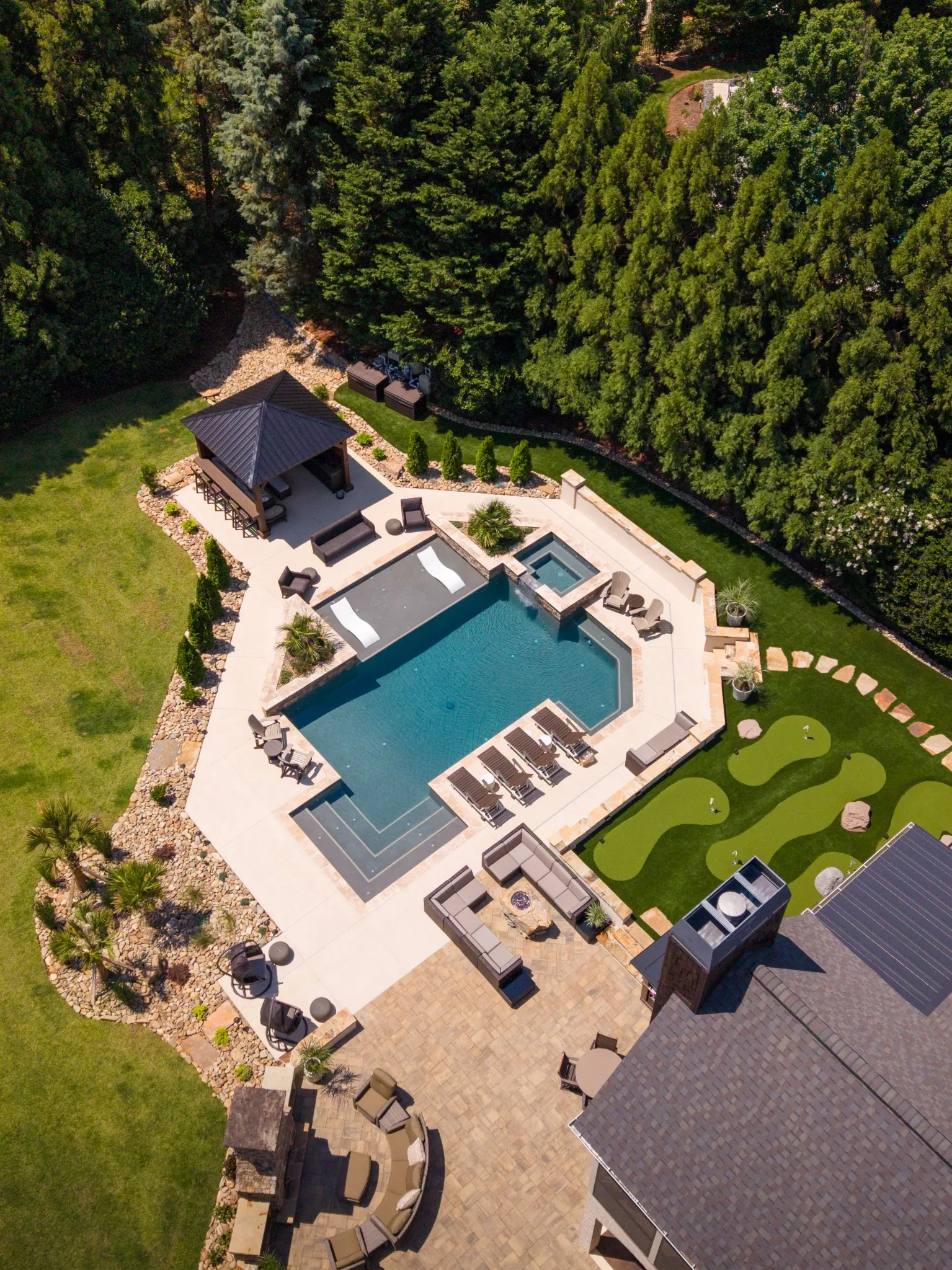
A gunite pool is an in-ground concrete pool that is sprayed into place rather than dropped in as a pre-made shell. Crews dig the hole, tie a steel rebar cage to the shape you want, then shoot a sand-and-cement mixture over the steel with a high-pressure hose to form the pool structure. Once that shell cures, a plaster finish goes on top to give the pool its color and its smooth, swimmable surface. The big reason Carolinas homeowners choose gunite is simple: it can be built in any shape, any size, and any depth you can dream up.
Most people who walk into our showrooms in Greenville or Charleston call it a concrete pool, and that's fine, it's the same thing. The name "gunite" comes from the spray "gun" used to apply the material. It's essentially sand and cement pumped dry through a hose, with water introduced right at the tip of the nozzle. That single detail is what makes gunite so flexible, and it's where this guide starts.
What does "gunite" actually mean?
Gunite is a method, not a brand. It refers to dry-mix shotcrete: the dry blend of sand and cement travels through the hose, and the operator (the "nozzleman") adds water at the nozzle as he sprays. Because he controls the water at the tip, he can build up walls, floors, curved benches, and steps by hand, shaping the concrete as it goes on. That hand-shaping is why gunite handles custom work so well.
You'll sometimes hear the word "shotcrete" used alongside gunite. Here's the plain-English difference. Shotcrete is the umbrella term for concrete that's sprayed from a hose. Gunite is the dry-mix version, where water meets the mix at the nozzle. Wet-mix shotcrete arrives already blended with water and gets pumped through the hose. Both build strong pools. Wet-mix tends to go faster on very large jobs, while dry-mix gunite lets the crew start and stop and shape as they go, which suits custom residential pools. At Hot Springs Pools & Spas we build all of our concrete pools with gunite. We've found the control it gives our crews on custom shapes is worth it.
How a gunite pool is built, step by step
A gunite pool comes together in stages, and the shell shoot is just one day in the middle of the process. Here's the realistic order of operations.
1. Layout and excavation
We mark out the exact shape and dig the hole. Because gunite is formed on site, the excavation can follow any outline, a free-form lagoon, a sharp geometric rectangle, an L-shape wrapped around a patio, whatever the design calls for.
2. Steel (the rebar cage)
Before any concrete goes down, the crew places and ties a grid of steel reinforcing bar, the rebar, across the floor and up the walls. This cage is the skeleton of the pool. It's held off the dirt so the sprayed concrete can fully encase it, and it's what gives the finished shell its structural strength. On our jobs the steel has to be fully tied and inspected before we shoot.
3. Rough plumbing
At a minimum, a short plumbing run is set before the shoot so the main lines are in place and protected when the concrete goes on. Skimmers, returns, and main drains get tied into the structure at this stage.
4. Shoot day
This is the day the pool goes from a lined hole to a solid structure, and it's the part homeowners love to watch. A large gunite truck shows up and a crew of roughly eight to eleven people gets to work. Depending on the size of the pool, one or two crew members run the nozzle and blow the gunite into place, while the rest follow behind with trowels, hand-shaping the walls, floor, steps, and benches.
Two things surprise almost every homeowner who stands in the yard for it. First, the truck is loud. Really loud. Second, gunite throws off a lot of dust, and it can drift, so we hang plastic over windows, outdoor kitchens, and anything nearby we want to keep clean. The crews make it look easy. It isn't. Reading the mix, controlling the water at the nozzle, and troweling a smooth, correctly-pitched floor takes real skill, which is one reason gunite quality depends so heavily on who's holding the gun.
Typically we shoot the shell a few inches thick over the steel, commonly around six inches on walls and floor for a residential pool, though the exact spec depends on the engineering for that particular build.
5. Curing
Here's a step people don't expect: after the shell is shot, you wait. Concrete gains strength by curing, not just drying. In the days right after the shoot, the crew keeps the shell wet, hosing it down so it cures slowly and evenly instead of drying out and cracking. Concrete keeps gaining strength for weeks (the industry benchmark for full strength is around 28 days), and interior finishing waits until the shell has cured enough to take it. This curing window is normal and it protects the pool you're paying for.
6. Tile, finish, and plaster
This is the step most people don't understand, so it's worth slowing down on. The gray gunite shell is the structure, not the finished surface. The plaster is a separate finish layer applied over the gunite, and it's what gives the pool its color and its smooth feel underfoot. Plaster comes in standard white, darker pigments, and aggregate blends with quartz or pebble mixed in for texture and durability. Waterline tile goes on around the same stage. When people say a pool "needs to be redone," they usually mean the plaster, not the gunite underneath.
7. Decking, fill, and startup
Coping, decking, and any hardscape wrap up the build. Then we fill the pool, balance the water, and start up the equipment. For where all of this lands on a calendar, our South Carolina pool cost guide and our residential build pages walk through budget and timeline in more detail.
The real reason people build gunite: it's one of a kind
Fiberglass and vinyl liner pools are excellent products, and for a lot of families they're the smart choice. But they're built around manufactured shapes. A fiberglass pool comes as a molded shell in set sizes. A vinyl pool works within the geometry a liner can handle. Gunite has no mold and no liner, so the shape is whatever you and your builder draw.
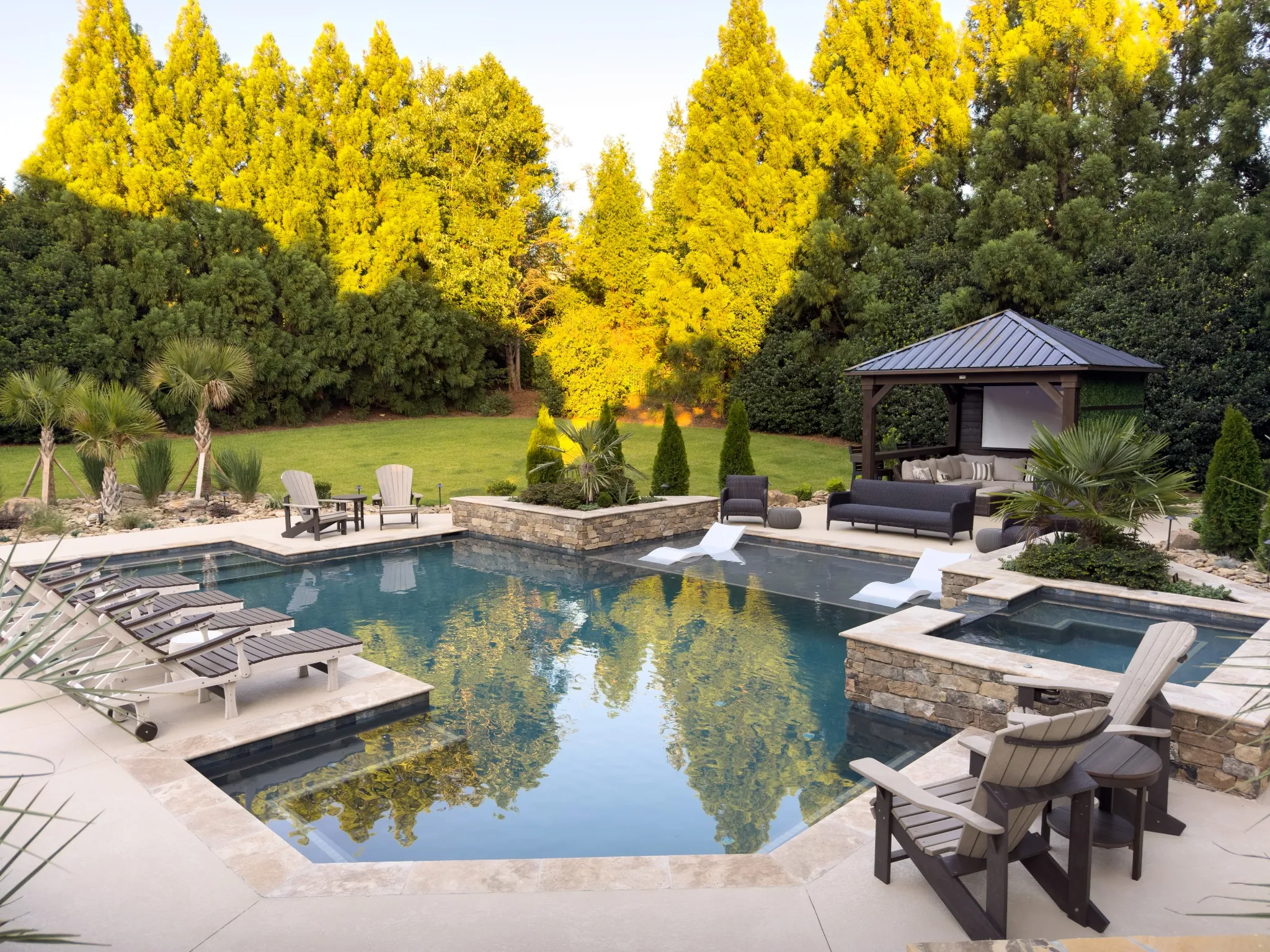
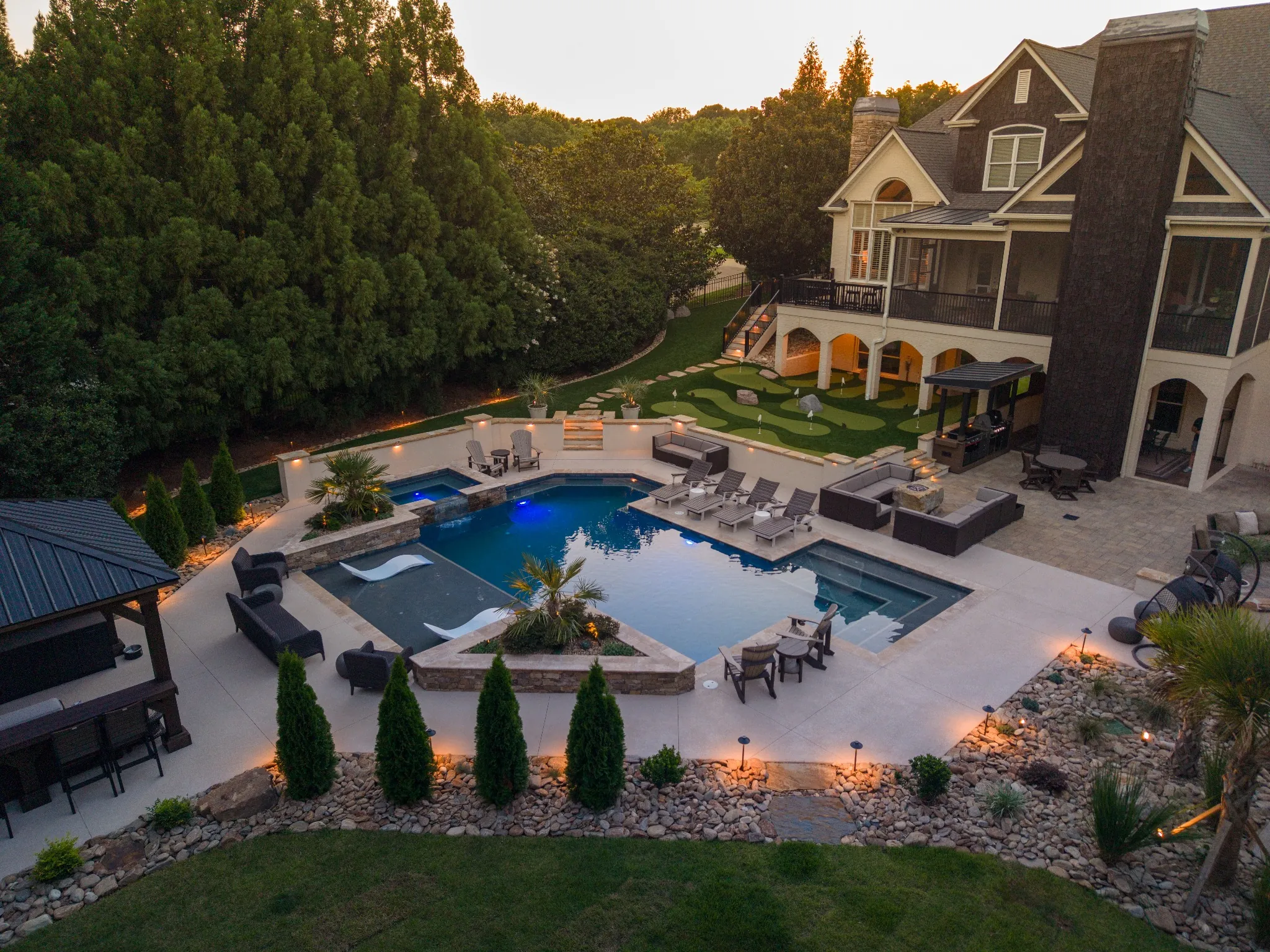
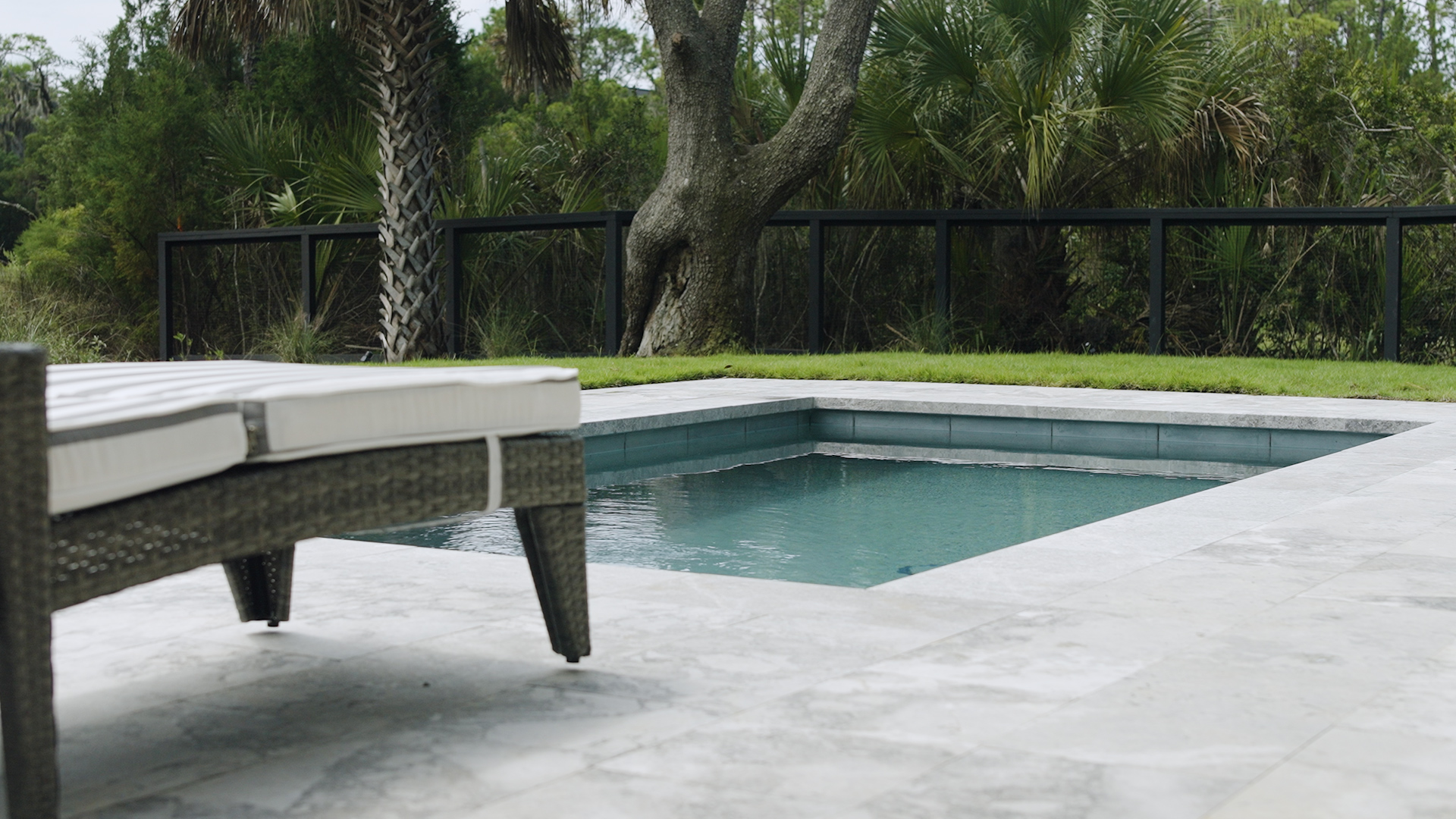
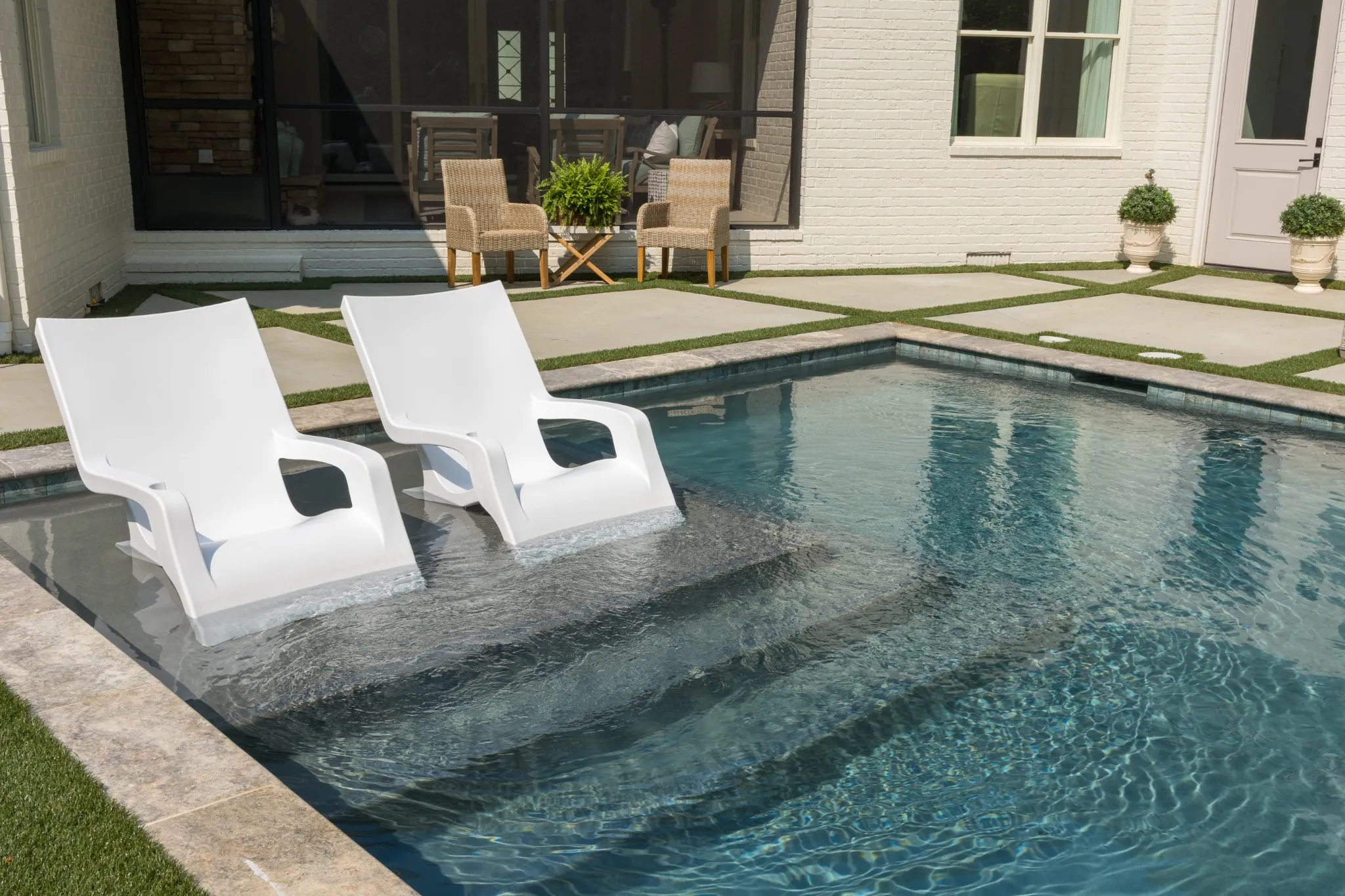
That freedom is exactly why our most recent gunite project went the way it did. The homeowners wanted a genuine one-of-one backyard, so we built a fully custom gunite pool with a spillover spa, a large sun deck (a shallow shelf for lounge chairs right in the water), custom bench seating built into the pool, and built-in planters designed to hold palm trees. None of that comes out of a mold. Each of those features was formed by hand on shoot day and finished in plaster to match. When a project is highly customized like that, gunite is usually the only way to get there.
If you want to see how gunite stacks up against fiberglass and vinyl on cost, maintenance, and lifespan before you decide, we lay it out side by side in our comparison of vinyl and gunite pools, and you can read more on our gunite pools page or compare our fiberglass and vinyl liner options directly.
Gunite pools in the Carolinas
We build the heaviest volume of gunite pools out of our Greenville and Charleston showrooms, and the ground you're building on matters. In the Upstate, the red clay is generally stable to build in, though every lot can hide rock or soft spots that show up at excavation. In the Charleston Lowcountry, a high water table and coastal soil mean drainage and shell engineering get more attention, because a concrete shell has to be built and backfilled correctly for the conditions. In the Western North Carolina mountains around Arden and Franklin, sloped lots and freeze-and-thaw winters factor into both the design and how the pool gets closed each season.
None of this is a reason to avoid gunite. It's a reason to build with someone who knows the local ground. A shell engineered and finished for Carolinas conditions is a pool that lasts for decades. That's the part a national website can't tell you, because it depends on the dirt in your specific backyard.
What owning a gunite pool actually asks of you
Gunite pools are built to last a very long time, and the structure itself often outlives its finish. The honest tradeoff is the finish. Over time, the plaster surface wears, and eventually a gunite pool needs to be re-plastered and often re-tiled. We usually tell owners to plan on that every 15 to 20 years or so, though water chemistry has a big say in it. A pool that's kept in balance holds its plaster longer. A pool that swings acidic or neglected can eat through plaster faster.
Budget honesty matters here, so here it is. Re-plastering (and re-tiling when it's due) is a real expense, a lot more than swapping a vinyl liner. Depending on the size of the pool and the finish you choose, a re-plaster can run in the neighborhood of $20,000 or more. That's not a yearly cost, it's a once-every-couple-decades cost, but it's the number you should have in the back of your mind when you compare gunite against a liner pool over the long haul. Day to day, ownership looks like normal pool care: keep the water balanced, keep the surface clean, and keep the equipment serviced. Our pool service team handles water care, repairs, and resurfacing planning when the time comes.
If you'd rather see finished gunite work in person before you decide, our project gallery and residential pools pages are a good place to start.
Frequently asked questions
Is a gunite pool the same as a concrete pool?
Yes. "Concrete pool" is what most homeowners say, and "gunite" is the construction method. Gunite is a sand-and-cement mixture sprayed over a steel rebar cage to form the concrete shell. When someone says concrete pool, gunite (or its cousin, shotcrete) is almost always what they're describing.
What's the difference between gunite and plaster?
Gunite is the structural shell, the sprayed concrete over the steel. Plaster is the finish layer applied on top of the gunite that gives the pool its color and smooth surface. The gunite is built to last for decades. The plaster is the part that wears over time and eventually gets redone.
How long does a gunite pool last?
The gunite shell itself can last for the life of the home when it's built and maintained well. The plaster finish is the piece with a shorter clock, typically 15 to 20 years before it needs to be redone, depending heavily on how well the water chemistry has been kept in balance.
Why is a gunite pool more expensive than fiberglass or vinyl?
You're paying for custom, on-site construction. Every gunite pool is built by hand to its own shape rather than dropped in from a mold or lined with a manufactured liner. That labor and flexibility cost more up front, and re-plastering down the road is a bigger expense than a liner swap. In exchange you get a pool that can be any shape, size, or depth. For a full side-by-side, see our vinyl vs. gunite comparison.
Does Hot Springs Pools & Spas use gunite or shotcrete?
We build all of our concrete pools with gunite (dry-mix). We prefer the control it gives our crews when they're shaping custom features like benches, sun decks, and spillover spas by hand on shoot day.
How messy is gunite shoot day?
Expect noise and dust. The gunite truck is loud, and the dry mix throws off dust that can drift, so we hang plastic to protect windows, outdoor kitchens, and anything nearby. It's a one-day event, the yard gets cleaned up after, and it's genuinely one of the most satisfying days of the whole build to watch.
Thinking about a gunite pool in the Carolinas?
If you want a pool that's built around your backyard instead of the other way around, gunite is worth a serious look. Our teams in Greenville, Charleston, Arden, and Franklin design and build custom gunite pools across the Upstate, the Lowcountry, and Western North Carolina. Reach out for a free design consultation and we'll talk through what your yard can hold, what it costs, and what the build really looks like from dig day to first swim.
Stuart Lockhart is the General Manager of Hot Springs Pools & Spas, serving Western North Carolina and Upstate and Lowcountry South Carolina from showrooms in Arden, Franklin, Greenville, and Charleston. He works directly with builders, service techs, and Watkins-trained hot tub specialists across the company's four locations.


.jpeg)
.jpeg)


