.svg)


.svg)
.svg)
.svg)
Hot Springs Pools & Spas has built vinyl liner, fiberglass, and gunite pools across North Carolina and South Carolina since 1989. We sell all three because all three are real options when the right pool meets the right backyard. The short version: vinyl liner pools are the most affordable inground option and the most common build in the Upstate; fiberglass pools are the fastest to construct and the lowest to maintain, with upfront pricing closer to gunite than to vinyl; gunite (concrete) pools are the most customizable, the most popular choice in the Lowcountry, and the right call for difficult sites and high-end design.
Because we build all three, we can be honest with you about which one fits. Customers walk into our Greenville and Charleston showrooms having heard a lot of confident opinions from builders who only sell one type, or from online content pushing whichever pool paid the writer. This is the version a builder with no stake in the construction-type fight would give you across the counter.
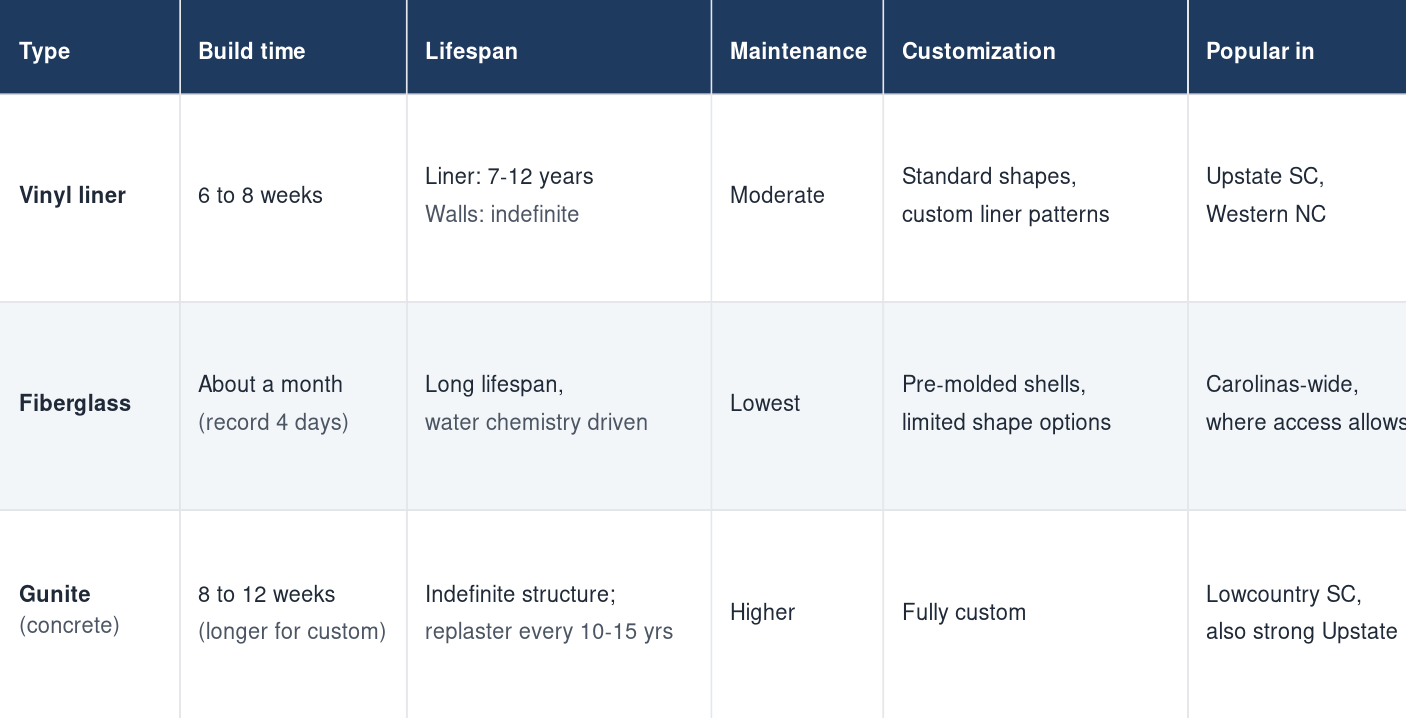
Vinyl, fiberglass, and gunite at a glance
Vinyl liner pools: the Upstate Carolinas favorite
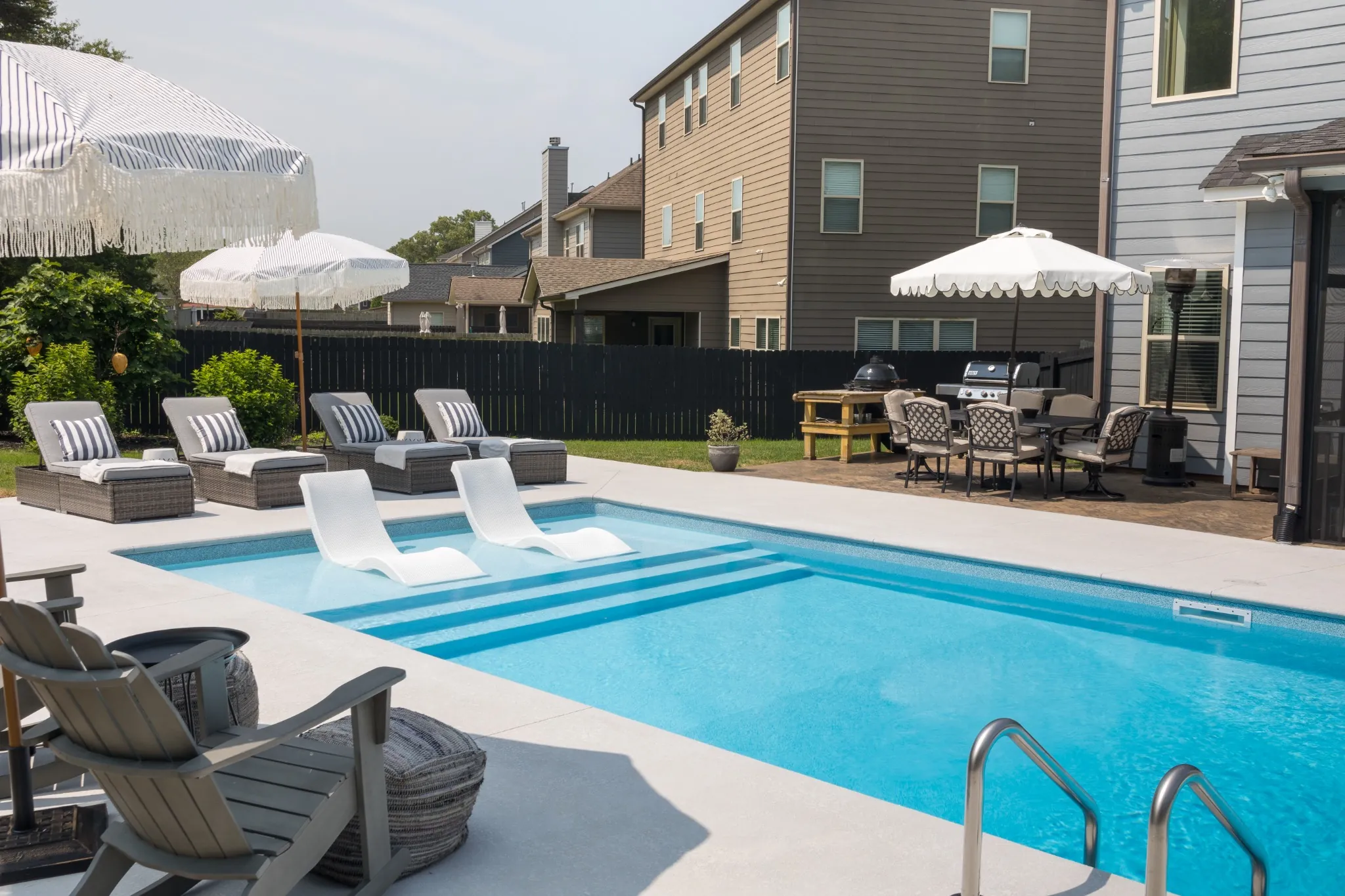
The vinyl liner pool is the most affordable inground option we build, and that price advantage is exactly why it dominates the Upstate market. A typical vinyl liner pool runs 6 to 8 weeks of construction time, depending on scope and weather. The pool wall is a panel system (usually galvanized steel) anchored in a concrete footer, with a vinyl liner stretched over the floor and walls to hold the water.
The "liner will rip" myth
The number one objection we hear in the showroom is "I don't want a vinyl, the liner will rip." A close second is "I have dogs, so vinyl is out." Both come from a belief that the liner is fragile and tears under the slightest pressure.
In practice, vinyl liners are remarkably resilient. You do not want to drop a screwdriver in your pool, and a poorly placed pool toy with a sharp edge can puncture a liner over time. But the overwhelming reason we replace liners is age, not damage. A typical liner lasts 7 to 12 years. By year 6 or 7 the aesthetics start to fade, and many homeowners replace at that point because they want their pool to look fresh, not because the liner has failed. Owners who don't mind some color fade routinely stretch a liner to year 12.
Do galvanized steel wall pools rust out?
This one comes up enough that it deserves its own section. The claim, usually from a builder who doesn't sell vinyl or builds them with an alternative material, is that galvanized steel wall pools rust out and disintegrate within 5 to 10 years.
That isn't what we see in the field. We've been building vinyl liner pools with galvanized steel panels since 1989 and have never replaced a single panel because of corrosion. That includes pools we built and pools other companies built. We do well over 100 liner replacements a year, and during a liner replacement there's no hiding the wall. The liner comes down, the wall is exposed, the homeowner sees it. The worst we ever see is some surface rust on the panel, which is cosmetic and not structural. Latham and the other reputable panel manufacturers ship these walls nationwide. If the product really were as fragile as critics like to claim, there would be a lot more horror stories than there are.
Who should build a vinyl liner pool
You are a strong candidate for vinyl if your priority is getting an inground pool at the most accessible price point, you want a clean rectangular or simple freeform shape, and you're comfortable budgeting for a liner replacement roughly once a decade. Upstate buyers who live in the red clay belt around Greenville, Mauldin, Simpsonville, and Easley pick vinyl more often than not.
Fiberglass pools: the fastest to build, the easiest to maintain
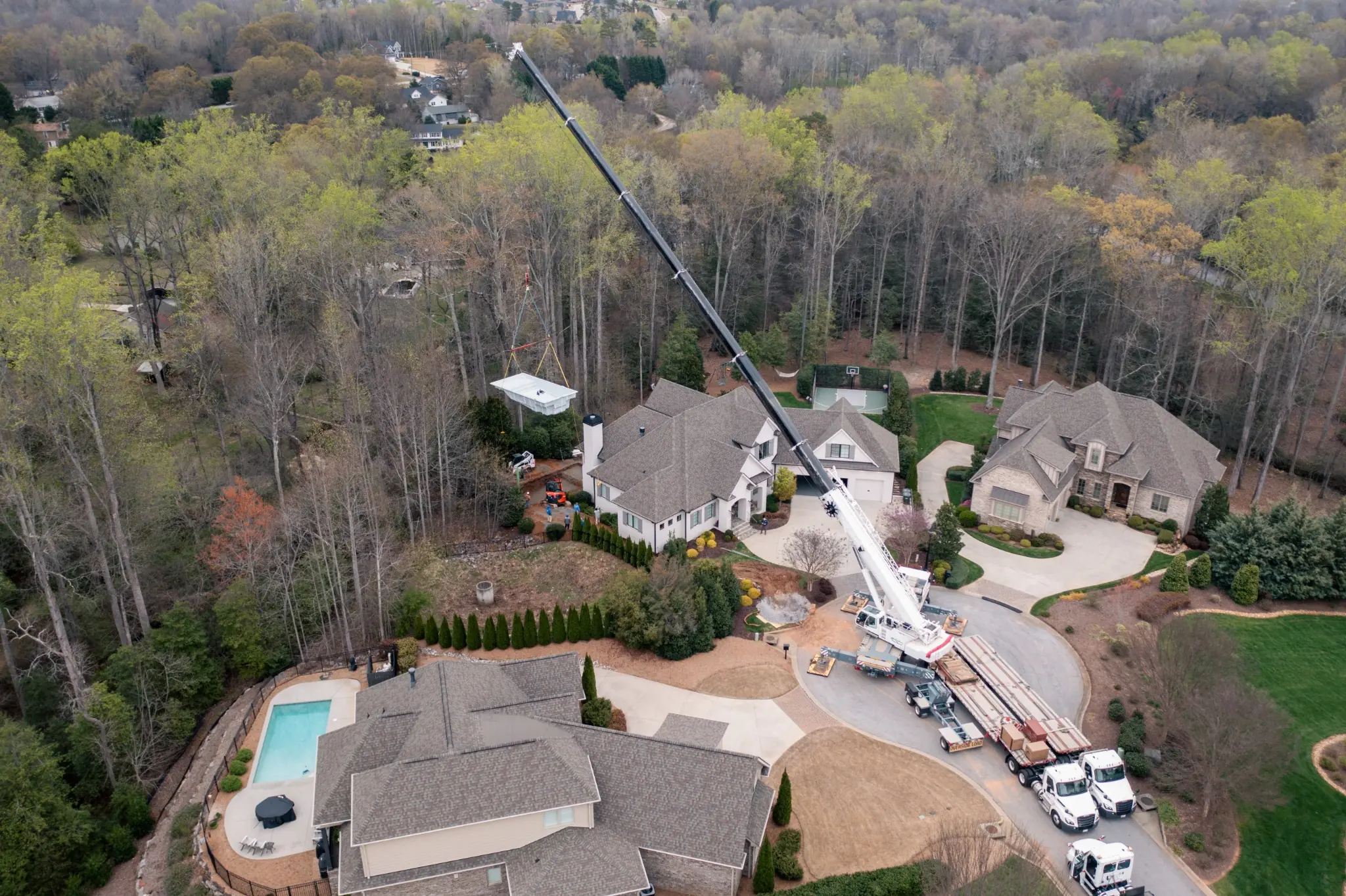
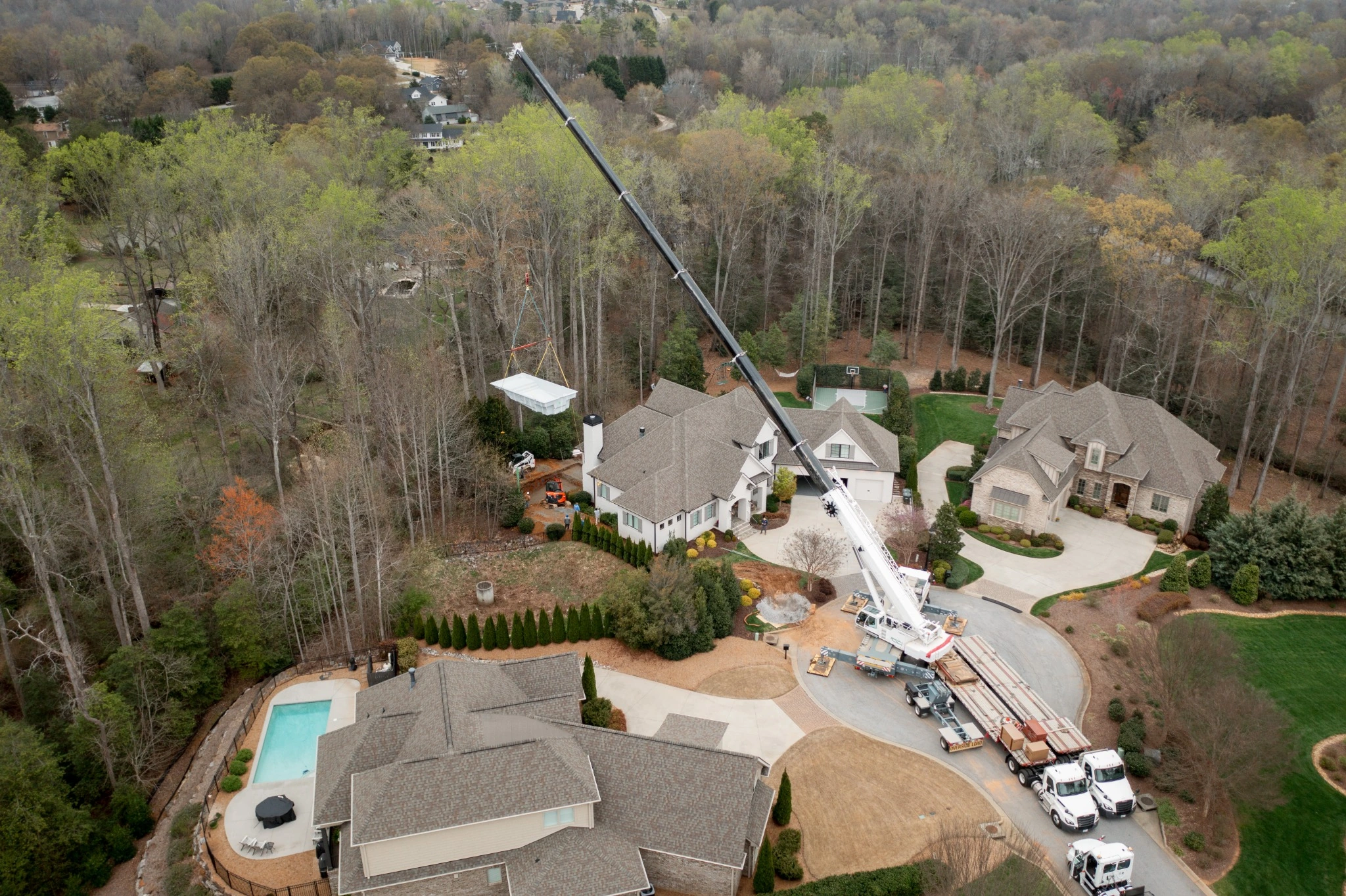
A fiberglass pool is a single-piece shell, manufactured offsite and trucked to your house, then dropped into a prepared hole with a crane. Because the shell arrives finished, fiberglass is the fastest construction type we install. We've done a fiberglass pool dig-to-finished in 4 days. That was a record, and a lot had to go right. A more realistic timeline for a typical Carolinas install is roughly a month, depending on what else is happening in the backyard.
Why fiberglass costs more than people expect
The biggest fiberglass misconception we correct in the showroom is the price assumption. Most buyers walk in thinking fiberglass is in the same price tier as vinyl. It isn't. Fiberglass pricing tracks much closer to gunite. The trade-off is that fiberglass has the lowest cost of ownership of the three, because the shell needs very little maintenance and never requires a liner replacement or a replaster.
That math gets interesting over time. If a vinyl pool costs $40,000 less than a comparable fiberglass pool upfront, you'll need decades of liner replacements before the fiberglass breaks even on pure cost. We say that not to talk anyone out of fiberglass (we love fiberglass pools), but because the "lowest cost of ownership" argument is the wrong reason to buy one in isolation. Most fiberglass buyers are after build speed, durability, and the no-fuss ownership experience. The cost-of-ownership angle is a nice bonus. For a full Carolinas pricing breakdown by construction type, see our South Carolina inground pool cost guide.
Latham shells and the Corinthian line
Shell quality matters more than most buyers realize. We install Latham fiberglass shells because Latham is reliable, the shells are strong, and the manufacturer stands behind them. The model line we install most often is the Corinthian. Gelcoat lifespan varies a lot with water chemistry (a neglected pool can degrade gelcoat faster than the manufacturer would tell you), so refer to Latham's published expectations and budget for staying on top of your chemistry.
The site reality: gravel, dirt, and the crane question
The part of a fiberglass install that buyers underestimate is what the job site looks like during construction. A fiberglass shell sits on a gravel base and is backfilled with gravel, so most of the dirt that comes out of your yard during excavation has to be hauled off (it can't be reused). Speed depends heavily on staging room. If a dump truck can back into the yard and dump a load of gravel right next to the pool, things move fast. If we have to hand-carry bagged gravel into the backyard one bag at a time, every step takes longer.
The crane is the other variable. A fiberglass shell weighs thousands of pounds, and the crane size depends on shell weight plus how far the crane has to boom. On most installs a midsized crane parks next to the dig and the shell goes in cleanly. On one memorable job, we had to use a 100-ton crane to set a 14 by 28 shell, because the pool had to be boomed more than 100 feet to reach the back of the property. A 100-ton crane is essentially a semi truck, and it requires two additional flatbed trucks to carry the counterweights. We had three semi trucks blocking a cul-de-sac for two hours. That's not a problem on a quiet lot. It is a problem on a busy road or a cul-de-sac that's the sole access for the neighbors.
Who should build a fiberglass pool
Fiberglass is the right pool for buyers who want fast install, minimal ongoing maintenance, and a strong durable surface, on a site that has enough room to stage gravel and dirt and reasonable crane access. If your backyard is tight, your driveway is narrow, and your street is busy, we can still build a fiberglass pool, but the job is more complicated and the logistics drive cost.
Gunite pools: the customizable, high-end choice
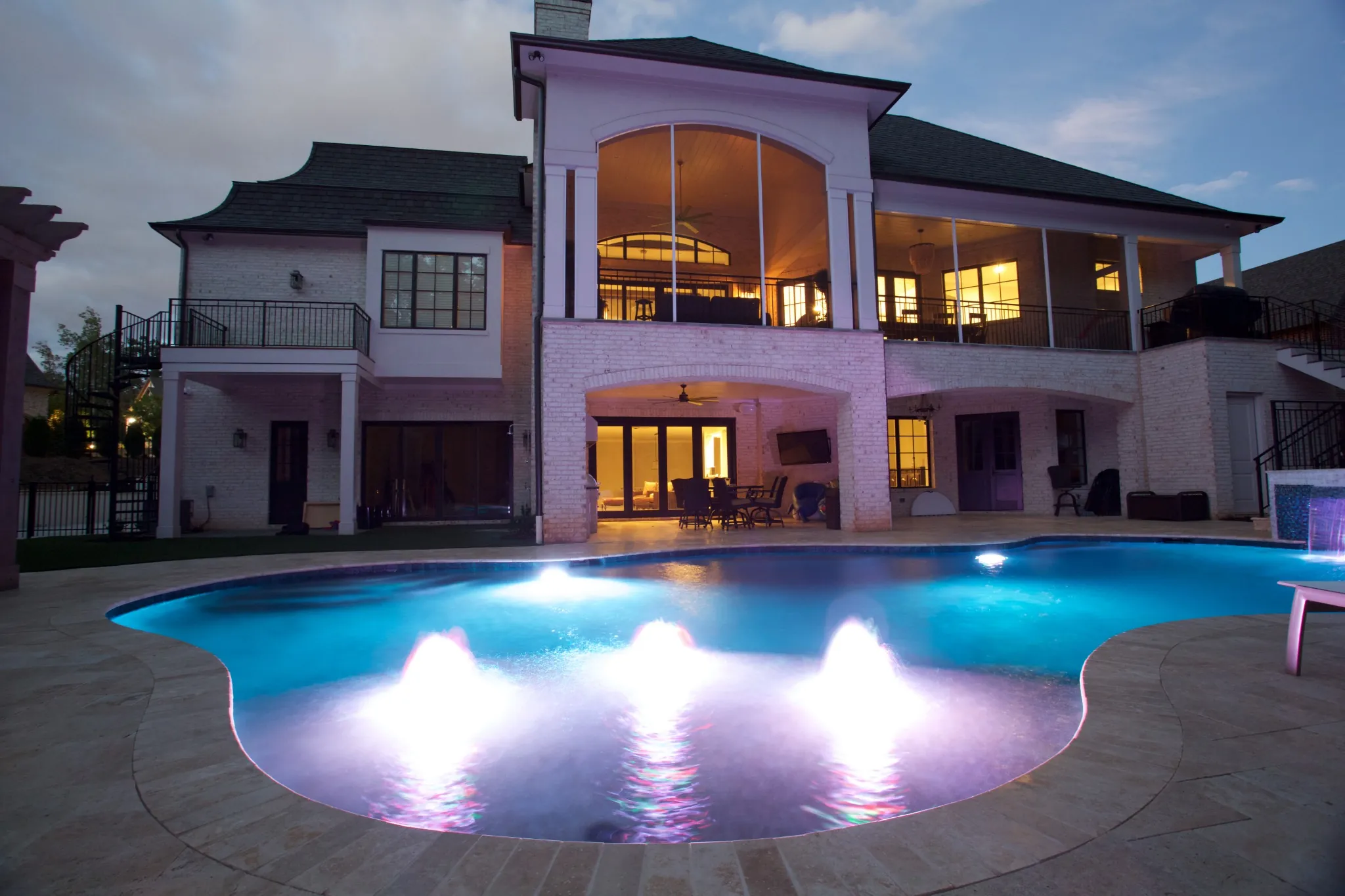
A gunite pool (commonly called a concrete pool) is built on site by spraying a steel rebar cage with a concrete and sand mixture, then finishing the interior with plaster or pebble. Because everything is built in place, gunite is 100% customizable. It also carries the high-end luxury look that most upscale custom pools in the Lowcountry are built to deliver.
Gunite is the most popular construction type around Charleston and across the Lowcountry, and we build a lot of gunite pools in the Upstate too. Gunite handles difficult sites better than the other two: we've built it on steep lake slopes, on lots with major elevation change, and on negative-edge and exposed-beam designs where the pool is half in the ground and half cantilevered out. Most of the gunite pools we build are clean rectangles with a tanning ledge, bench seating, and sometimes a spillover spa. A handful of jobs each year are wildly custom.
Pricing reality, and how features escalate the budget
Gunite pricing is where customers get the most surprised. We've sold beautiful gunite pools fully installed for under $100,000, and we've sold gunite pools at $300,000 and above. The variables that drive that range are pool size, design complexity (curves, vanishing edges, raised walls), interior finish (standard plaster vs. pebble vs. tile), decking, and features like an autocover or a spillover spa. Each of those line items can add tens of thousands of dollars individually.
What's true about gunite maintenance, and what isn't
The maintenance fact worth knowing: gunite pools need to be replastered eventually. Most pools we see in the Carolinas need a replaster every 10 to 15 years, and a typical replaster starts around $10,000 and can climb depending on size and finish. Plan for it the way you'd plan for a roof replacement: not annual, but inevitable.
The myth: that gunite is rough on your feet or will cut you. That belief almost always comes from a swim in a pool with older, failing plaster. New plaster, in good condition, is not as glassy as fiberglass or vinyl, but it's perfectly comfortable to swim in and will not cut your feet.
Who should build a gunite pool
Gunite is the right pool for buyers who want a fully custom design, who have a difficult site that needs a poured-in-place structure, who want premium features (vanishing edges, large tanning ledges, exposed beams, spillover spas), or who simply prefer the high-end aesthetic that comes with a custom-built concrete pool.
What changes when you cross the Carolinas state line
The recommendation isn't only about the pool. Where you live changes which construction types are more or less practical.
Upstate South Carolina and the red clay myth
When we first started selling fiberglass in the Upstate, competing builders told customers that fiberglass wouldn't work in red clay because the clay holds water and would shift or float the shell. That's a misconception in our area, as long as the install is done correctly. Every fiberglass pool we install in clay soil gets the proper size and amount of gravel, a well point system at the deepest point, and an access port so we can drop a sump pump under the pool if water ever needs to come out. With those three things in place, the soil concern goes away.
The thing nobody tells Upstate clients before construction starts is how messy red clay actually is. It gets everywhere when it rains. If you have dogs that need the backyard, plan on front-yard walks for the duration of the build. Dogs love to run on the dirt piles and track clay through the house.
Charleston and the Lowcountry
Lowcountry soil is sandy, and the bigger issue is groundwater. It is very common to need a well point system just to dig the hole and keep it dry long enough to get the pool installed. Gunite handles those site conditions well, which is part of why gunite is so dominant in the Charleston market. Fiberglass can work in the Lowcountry too, with the appropriate dewatering plan. Vinyl is the least common Lowcountry build.
Western North Carolina mountain lots
If your build is on a sloped lot near Asheville, Arden, or Franklin (we serve all of these from our Asheville-area showroom and our Franklin location), gunite is often the most flexible answer for elevation change. Lake lots with steep drops are also natural candidates for negative-edge designs that only gunite can deliver cleanly.
So which inground pool should you actually build?
Here's how we'd frame the decision after 37 years of building these pools in the Carolinas:
- If your primary constraint is upfront budget: vinyl liner is the answer. You'll get more pool per dollar than the other two options and you'll have a pool that lasts a lifetime with periodic liner replacements.
- If your primary priority is low ongoing maintenance and fast install: fiberglass is the answer, provided your site can accommodate the gravel staging and crane access.
- If your primary priority is custom design, complex site conditions, or a high-end aesthetic: gunite is the answer. The price spread is wide, but no other construction type matches the design flexibility.
What I would build for my own backyard
The honest answer is that I would own any of these three. The decision for my own house would come down to total project budget (the pool is rarely the only thing happening in the backyard) and the constraints of the lot.
If I were starting from scratch, I'd build a clean-line rectangle with bench seating in the deep end and a sun deck in the shallow end. That design works in all three construction types. With unlimited budget, I'd go fully custom gunite, with a tanning ledge off to one side, generous bench seating, and plenty of swim space. With a real-world budget, I'd be just as happy with a vinyl rectangle. For a deeper read on what each construction type actually costs in the Carolinas, see our South Carolina inground pool pricing guide. For a deeper comparison of vinyl and gunite specifically, see our vinyl vs. gunite breakdown.
Frequently asked questions
Are fiberglass pools cheaper than vinyl pools in the Carolinas?
No. This is the most common pricing misconception we correct in the showroom. Fiberglass pricing is closer to gunite than to vinyl. Fiberglass has the lowest ongoing maintenance cost of the three construction types, but the upfront price is higher than a comparable vinyl liner build.
How long do vinyl pool liners last in North Carolina and South Carolina?
Typically 7 to 12 years. Aesthetics drive most replacements: by year 6 or 7 the liner starts to show fading and many owners replace at that point. Owners who don't mind some color fade routinely stretch a liner to year 12. Replacement is driven by age, not damage, the vast majority of the time.
Is fiberglass a good choice for the red clay soil in the Upstate?
Yes, provided the install includes the right gravel base, a well point system at the deepest point of the dig, and a sump access port. We've installed fiberglass shells across Greenville, Mauldin, Simpsonville, and the surrounding Upstate markets in clay soil without issue. The "fiberglass doesn't work in clay" line is usually coming from a builder who doesn't install fiberglass.
How often does a gunite pool need to be replastered?
Most gunite pools in the Carolinas need a replaster every 10 to 15 years. A standard replaster typically starts around $10,000 and goes up from there depending on pool size and finish material (plaster, quartz, or pebble). It's a periodic expense rather than an ongoing one, similar to budgeting for a roof replacement.
How long does it take to build each type of pool?
Vinyl liner pools take roughly 6 to 8 weeks of construction. Gunite pools take roughly 8 to 12 weeks for a standard build, longer for highly custom designs. Fiberglass is the fastest: about a month is typical, with simpler builds occasionally finishing faster (we've done one in 4 days under perfect conditions). Weather, permitting, site access, and decking all move the actual timeline.
Which inground pool adds the most resale value in NC and SC?
Any properly built inground pool adds value in our Carolinas markets, but the magnitude depends more on overall backyard design (decking, landscaping, screening) than on construction type. A well-built fiberglass pool with a clean paver deck will appraise as well as a comparably sized vinyl pool in most Upstate neighborhoods. In luxury Lowcountry markets, custom gunite designs tend to be the expected finish and can affect appraisal more than the other types.
Talk to a builder who installs all three
If you're trying to decide between vinyl, fiberglass, and gunite for your own backyard, the best next step is a site visit. We can walk your yard, look at access, talk through the soil, and quote each construction type if you want to compare apples to apples. Request a free estimate, or stop by one of our showrooms in Greenville, Charleston, Arden (serving Asheville), or Franklin.
About the author
Stuart Lockhart is the General Manager of Hot Springs Pools & Spas, serving Western North Carolina and Upstate and Lowcountry South Carolina from showrooms in Arden, Franklin, Greenville, and Charleston. He works directly with builders, service techs, and Watkins-trained hot tub specialists across the company's four locations.


.jpeg)
.jpeg)


