.svg)


.svg)
.svg)
.svg)
A new inground pool installed in South Carolina in 2026 typically falls into one of three price ranges depending on construction type. A vinyl liner pool starts in the mid-to-high $40,000s for a bare-bones build, but most projects land between $55,000 and $65,000 once decking and site work are included. Fiberglass pools, including the Latham shells we install at Hot Springs Pools & Spas, run $75,000 to $110,000 or more. Gunite pools, which give you the most design flexibility, average $90,000 to $110,000 for a simple size and design and easily climb past that when you add a spa, custom features, or significant outdoor living.
Those are the honest middle of the bell curve for South Carolina right now. They aren't a quote and they aren't a promise. They're the ranges we see across the residential pools we build out of our Greenville and Charleston locations, plus the Upstate sub-markets we serve like Mauldin, Greer, Easley, and Anderson. The rest of this guide explains what's in those numbers, what isn't, and where I see most South Carolina buyers spend money in places they later wish they hadn't.
What's actually in a Hot Springs Pools quote
When we quote a pool, we usually cover the pool itself and the decking around it. If your project calls for more, we coordinate other contractors directly or hand you a clean handoff to someone you bring in yourself. That's the baseline our numbers are built around.
What's typically included: the shell or liner, excavation and site prep, plumbing and the equipment pad, a heater if you want one, a saltwater system if you choose one, basic decking around the pool, and pool startup and chemical fill.
What's commonly outside that base number, and where customers comparing competitor quotes get caught later:
- Extensive decking square footage or premium materials like pavers or travertine
- Fencing (South Carolina pool code requires it)
- Permits and inspections
- Electrical for the equipment pad and any landscape lighting
- Automation systems
- An auto cover or premium safety cover
- Landscape repair after excavation
- Any outdoor kitchen, fire feature, pergola, or covered patio
We say that openly because the cheapest quote on the table is almost never the cheapest project once it's done. If a competitor's base number is $15,000 lower than ours, the line items it leaves out are worth asking about specifically.
Vinyl liner pools in South Carolina: starts in the mid-$40s, lands in the $55K to $65K range
Vinyl liner is the most affordable inground option we build. The starting price for a bare-bones vinyl pool in South Carolina runs in the mid-to-high $40,000s. At that floor you're looking at a smaller pool, minimal decking, and a site that doesn't fight you. Very few of our actual projects stay at that number.
The typical landing range is $55,000 to $65,000 fully installed. That reflects a 16x32 to 20x40 pool size, standard decking around the perimeter, a sensible equipment package with salt or chlorine, automation, and a heater option, plus a standard liner pattern and depth.
What pushes a vinyl pool higher: bigger size, premium liner patterns, tanning ledges or sundecks, automation upgrades, larger decking square footage, and any meaningful site work. A liner pool with a custom tanning ledge, premium decking material, and a sloped lot can easily push past $80,000.
The thing every vinyl buyer should know: a vinyl liner is a consumable. You'll replace it every 8 to 12 years depending on chemistry, UV exposure, and use. Budget for that. It's not a flaw of the construction type. It's just the reality of vinyl.
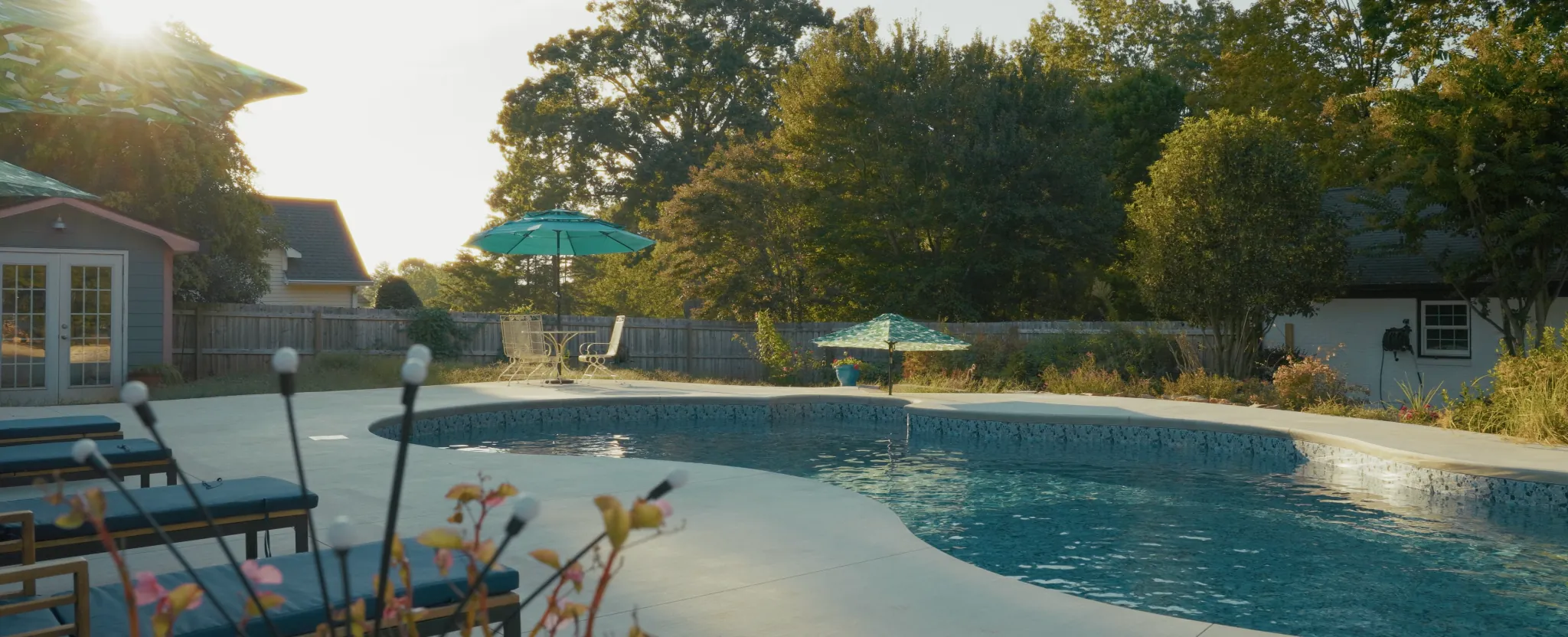
Fiberglass pools in South Carolina: $75K to $110K+
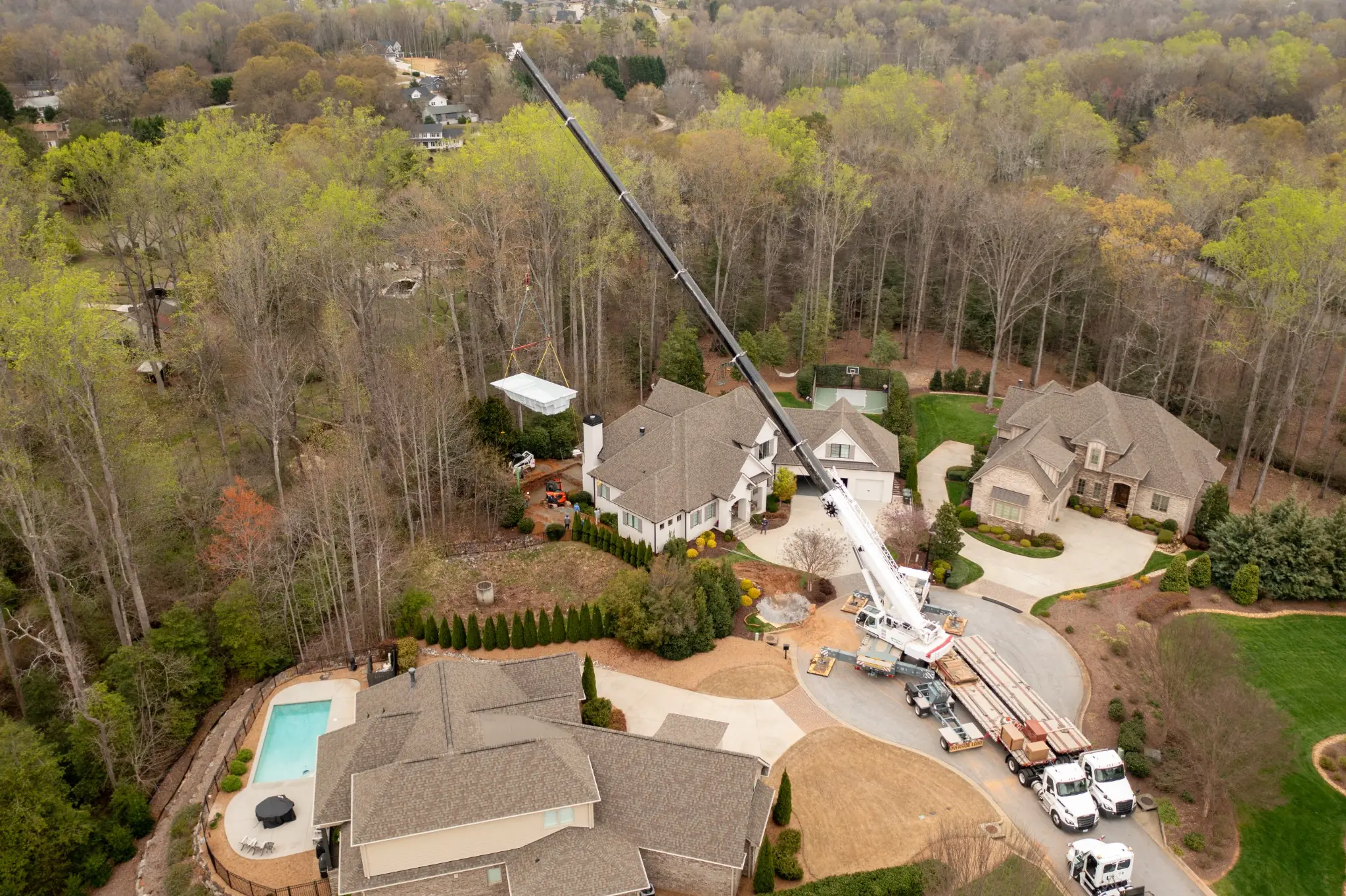
Fiberglass is the construction type that has gained the most ground in our market in the last decade. We install Latham fiberglass shells, which matters because Latham is the largest fiberglass shell manufacturer in North America. That gives us access to a range of shapes, sizes, and finishes that smaller suppliers can't match, and the warranty and supply chain behind the pool is real.
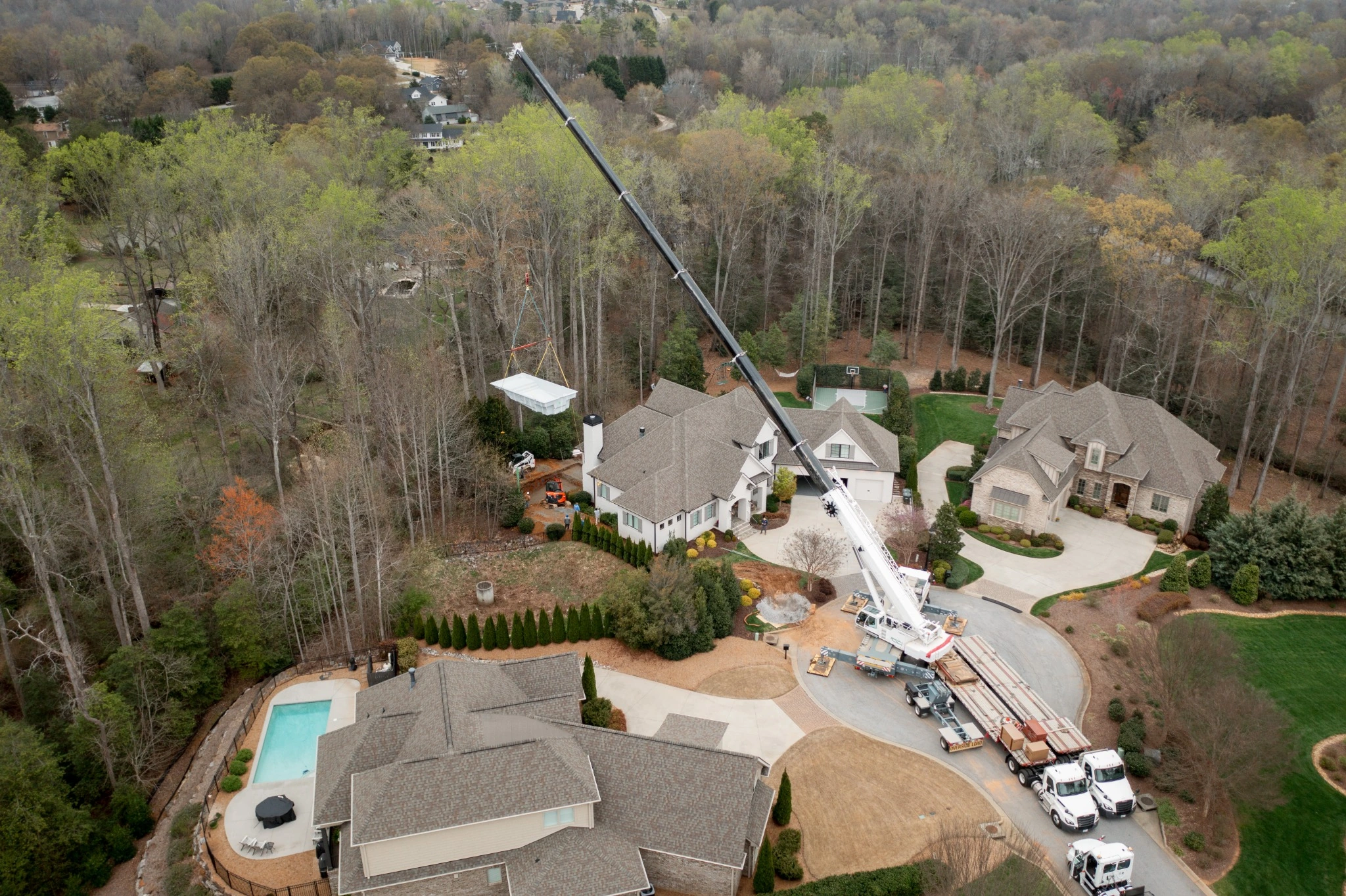
Pricing for a fiberglass pool in South Carolina typically runs $75,000 to $110,000 or more fully installed. Drivers within that range: shell size (typical models run from about 12x24 up to roughly 16x40), shell color and finish package, decking material and square footage, site access (especially crane access to drop the shell), and equipment and automation choices.
Why people choose fiberglass: faster install (typically four to six weeks from start to swim, weather permitting), a smoother gel-coat surface that's gentler on feet and on equipment, and the lowest lifetime maintenance of the three construction types. The shell doesn't need refinishing, doesn't need liner replacement, and the gel-coat finish makes algae harder to establish.
The honest tradeoff: you're working within Latham's shell catalog. If you want a fully custom shape, fiberglass isn't the path. That's where gunite makes sense.
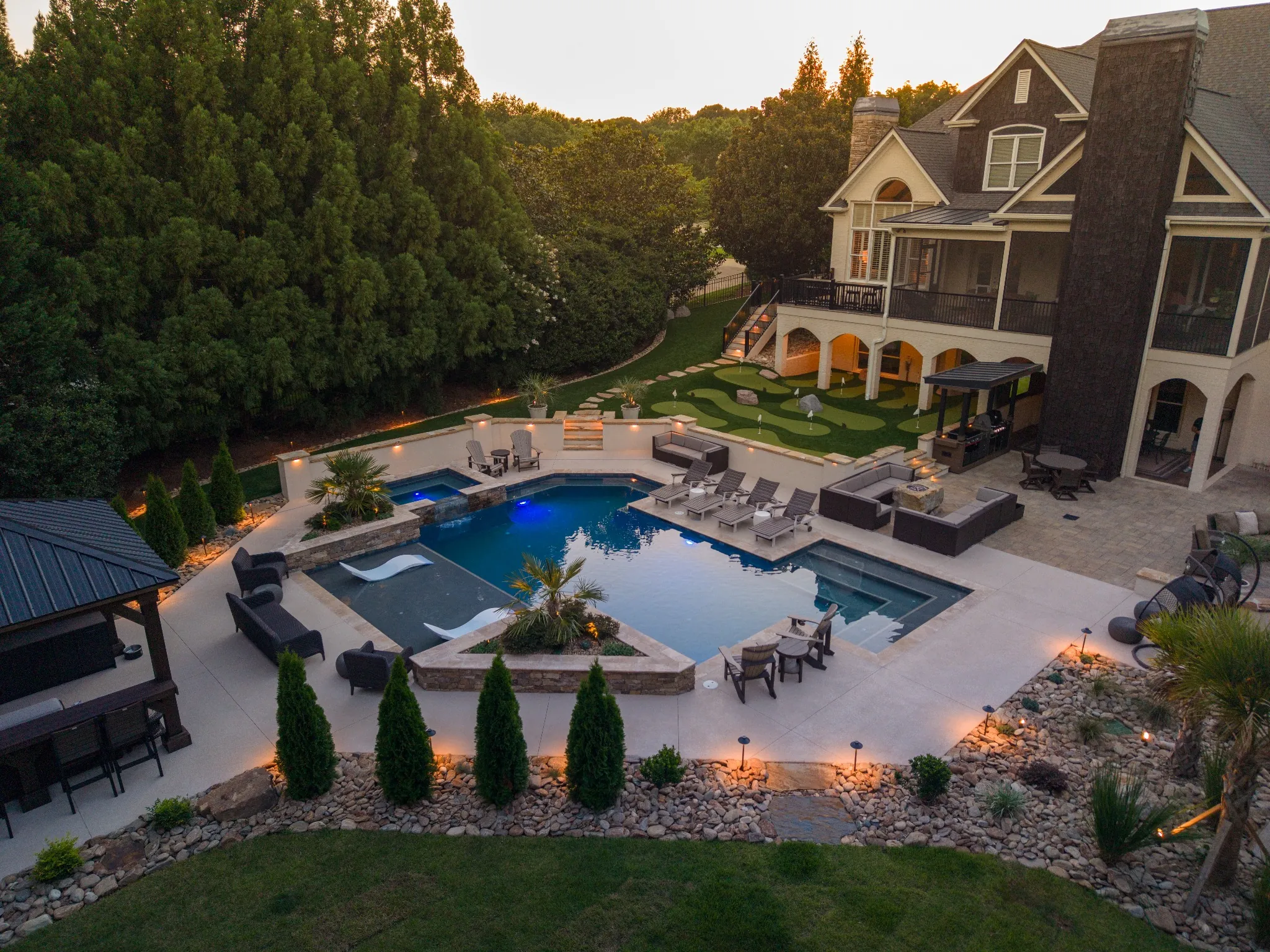
Gunite pools in South Carolina: $90K to $110K for a simple build, easily more
Gunite is the most customizable pool you can build. It's also the most expensive at the start and the most expensive at the finish, because gunite by its nature invites customization.
A simple gunite pool in South Carolina, with a straightforward size and design, averages $90,000 to $110,000 fully installed. That number includes the shell, the decking, and the equipment upgrades we typically recommend (energy-efficient pump, good filtration, salt or chlorine, automation). It does not include a spa.
Adding a spa to a gunite project adds a meaningful amount. So do tanning ledges, beach entries, custom water features, premium finishes (plaster vs. pebble vs. tile), and custom shapes. A heavily customized gunite project in the Upstate or Lowcountry can run $150,000, $200,000, or more once the surround is built out.
It's not hard to be more. That's a real sentence I find myself saying in the showroom. If you're considering gunite, sit down with us and price the actual scope before you fall in love with a feature list.
What pushes a South Carolina pool budget past where it started
Across all three construction types, the same site and scope factors push budgets higher more often than the pool itself does. The big ones.
Dirt haul. When the soil from your excavation can't stay on the site (because of grade, drainage, or a small lot), it has to be trucked off. We've built pools that needed $5,000 to $10,000 or more of dirt removal alone just to make the project fit. Customers rarely think about this. We always do.
Retaining walls. If the yard is sloped, the pool design may require a retaining wall to make the pad work. That's a real line item, not a small one.
Drainage. Pools change how water moves around your yard. Sometimes that means adding a French drain, a swale, or a regrade. South Carolina afternoon thunderstorms make this matter more than people expect.
Decking material and square footage. Concrete is the cheapest. Pavers, stamped concrete, and travertine all step up from there. The bigger the decked area you want, the bigger that number gets.
Site access. A backyard you can drive a Bobcat into is cheaper to build in than one you can't. If a fence has to come down or a tree has to be taken out, that's part of the budget too.
Permitting. Counties vary. Some are fast and reasonable; others slow the project by weeks. We handle the permit process for you, but it can affect timeline and occasionally cost.
Building a pool in the Upstate vs. the Lowcountry
South Carolina isn't one market. The Upstate (Greenville, Mauldin, Greer, Easley, Anderson, Spartanburg) and the Lowcountry (Charleston and the surrounding area) have different soil, different climate, and different regulations. All three affect how we build and what it costs.
The Upstate's reality is red clay. Upstate excavation is reliable but demanding. Red clay holds shape well, which is good for pool construction, but it expands and contracts with moisture more than sandy soil does, and drainage planning matters. If you're building in Greenville or one of the Upstate sub-markets, expect drainage to be part of the conversation from day one.
The Lowcountry's reality is the water table. Charleston-area pool projects have to account for the water table from the first conversation. In some neighborhoods, you hit groundwater within a few feet of the surface. That changes how excavation works, how the shell sits, and what equipment placement looks like. If you're building in Charleston or anywhere in the Lowcountry, this is the single biggest physical factor we plan around.
Permits and HOAs vary by county. Greenville County and Charleston County have different fee structures and different timelines. HOA review can add weeks. We handle the paperwork; we just want you to know it's a real part of the schedule.
The mistake most South Carolina buyers make
This is the section I'd tell you to read first if you only have time for one. After 37 years of building pools in this region, the pattern I see most often is that buyers focus on every individual pool feature and forget about everything around it.
The pool you build is the anchor of the backyard. It isn't the whole backyard. The people who tell us, two and five years in, that they love their outdoor space are almost never the customers who maxed out the pool feature list and ran out of budget before they bought a chair to sit on.
The three traps I see most often.
First, over-spec'ing the pool and under-spec'ing the surround. Customers will spend $15,000 on a custom water feature and then put two cheap plastic chairs next to it. The pool looks like a magazine cover. The backyard doesn't feel finished.
Second, ignoring long-term maintenance cost. Every decision you make at purchase has a maintenance bill attached. A custom plaster gunite pool in a high-pollen area costs more to keep clean than a fiberglass pool of the same size. A 1.5HP single-speed pump uses more power than a variable-speed alternative. We'll tell you which choices save money over five and ten years if you ask.
Third, chasing the lowest price. Sometimes the lowest quote is the cleanest quote and the best deal. Often, it's the quote that left out fencing, permits, electrical, and proper drainage. If you're comparing builders, ask each one what's in and out of their base number using the list earlier in this post as a checklist.
What I'd build for my own backyard
If I were building a pool for my own family today, here's what I'd do.
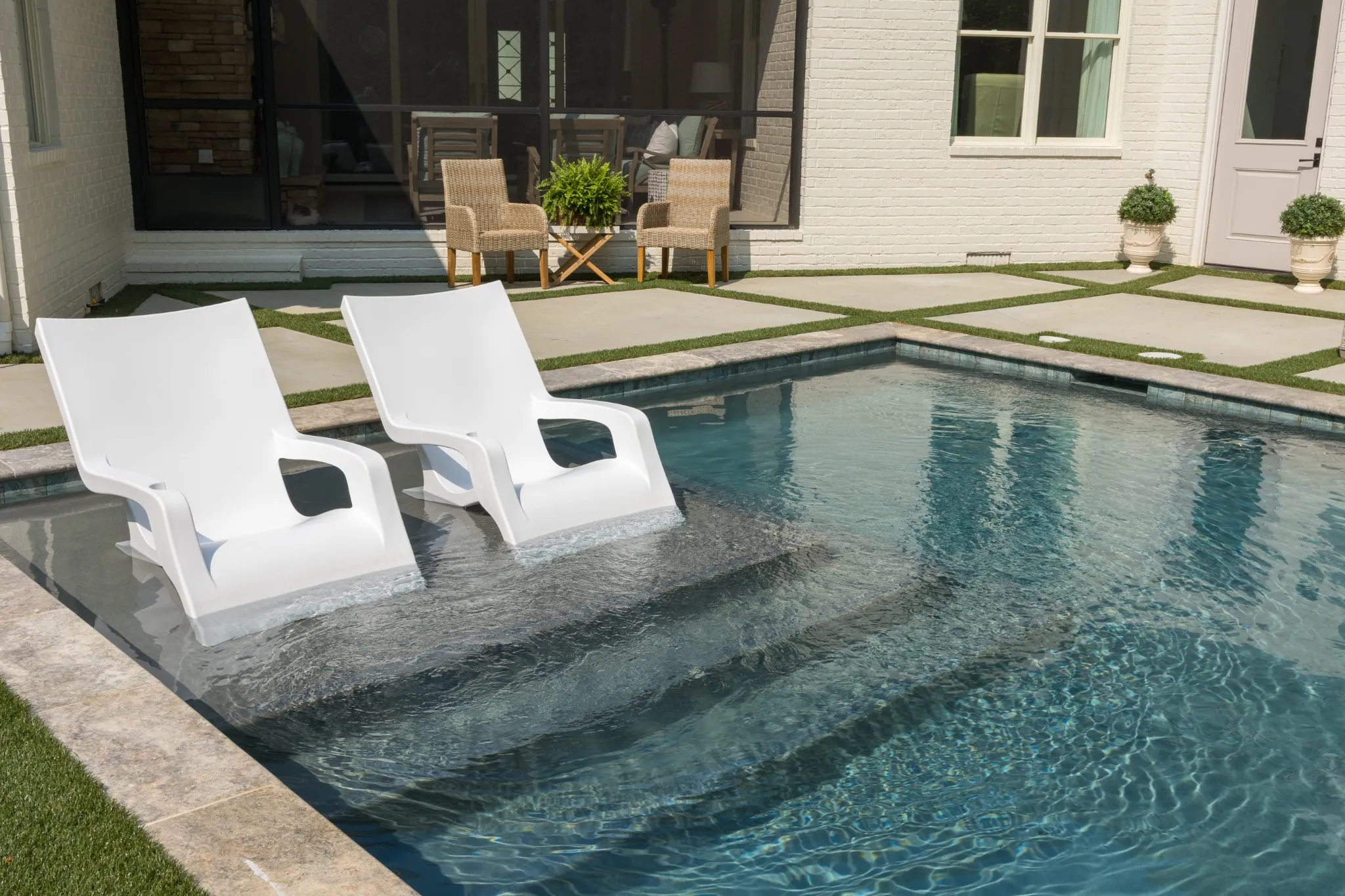
Something simple and clean. Easy to maintain. A rectangle or a clean geometric shape. What takes the best photo from a complexity standpoint isn't always the easiest thing to live with year after year. I'd make sure to have bench seating and a sundeck so family and friends had places to sit, relax, and spend time with each other. Sundecks are great for smaller kids that just need a shallow area to play as well a lounging spot for sunbathers of all ages. Again, think "how will I/we use this space".
Where I'd spend my money: a good equipment package (energy-efficient variable-speed pump, strong filtration, saltwater chlorine generation, a heater so I actually swim in May and October, easy automation), and an auto cover if it fit my budget. If an auto cover didn't fit, I wouldn't lose sleep over a standard safety cover. A good robotic cleaner can make a world of difference when it comes to keeping the pool clean and tidy. When it comes to equipment upgrades, ask yourself, "does ____ make owning the pool easier or allow me to use and enjoy it more".
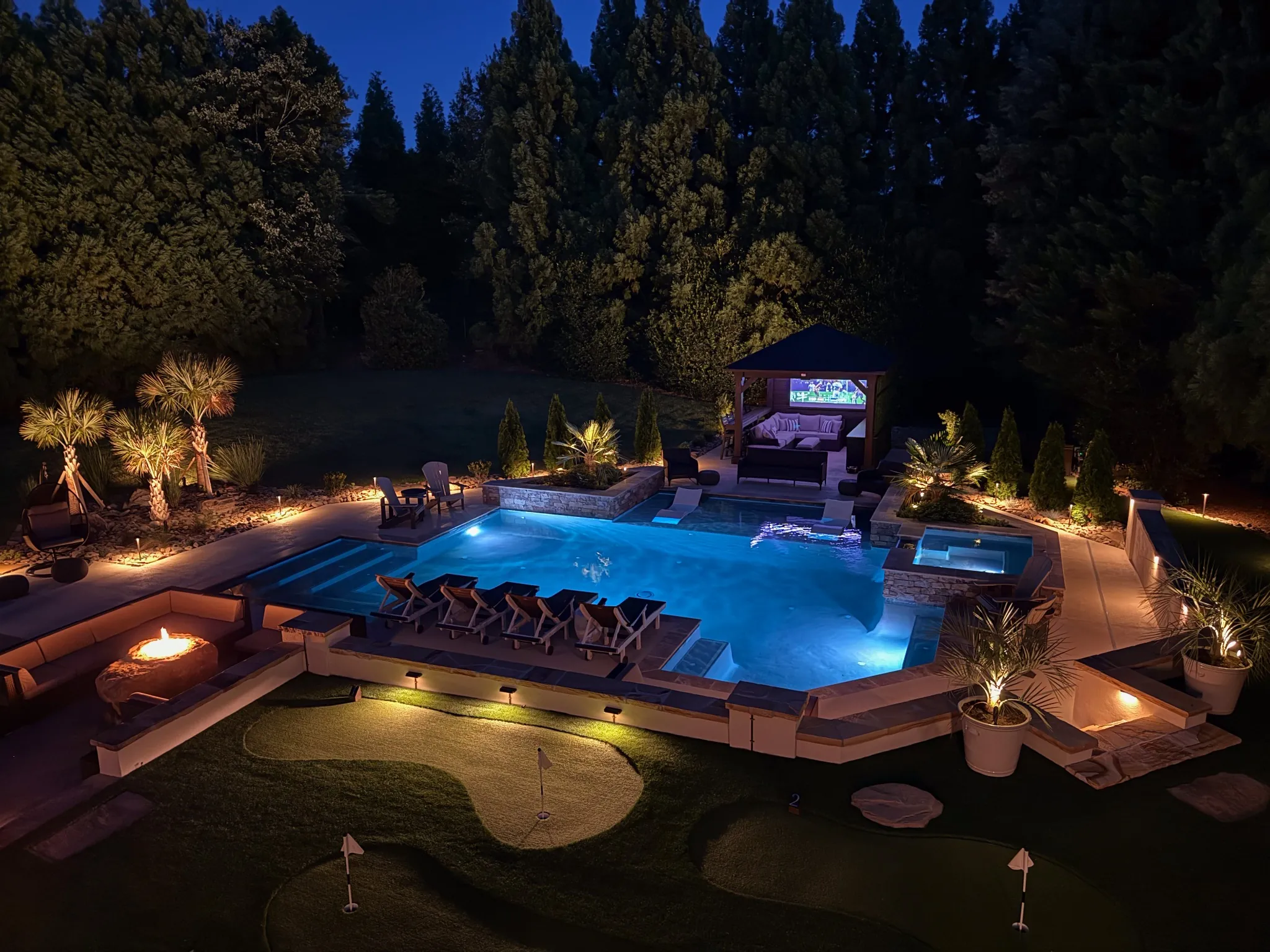
I'd also put a meaningful portion of the total project budget on what's around the pool: decking that actually feels like an outdoor room, lighting, furniture, a covered patio, maybe a grilling area. Anything that gets me and my family outdoors year round.
You don't have to spend six figures to love your backyard. Honestly, after 37 years of this, the customers who tell us they enjoy their pool the most aren't the ones who spent the most. They're the ones who matched the pool to how their family actually lives outside. Sometimes that's a gunite pool with a tanning ledge and a heater. Sometimes it's a 16x32 vinyl with a covered patio and a fire pit. There's no version of right that only works at one price point.
The question I'd encourage every buyer to sit with before signing anything: how would my family get the most out of our outdoor space with the budget I have? That's the question that makes a backyard worth building.
A real install story from this past year
One project from this past year captures the point better than any framework can.
The customer could absolutely have afforded a high-end gunite pool. He had the budget. Instead, he chose a simple rectangle vinyl liner pool with a sundeck and tanning ledge, and he put the rest of his budget into the rest of his backyard: an outdoor grilling area, two covered patios with audio and video, a high-end stand-alone hot tub focused on hydrotherapy, and serious landscaping and outdoor lighting. We even helped him find a contractor to build out an outdoor kitchen.
Here's what he wrote in his Google review afterward:
"I bought a pool, a hot tub and a cabana. Additionally they helped me find someone to put in a kitchen. I cannot tell you how many compliments I've received just in the last few weeks since it's been installed. Additionally I got the pool heater. 75-80 degree days would be too cold to swim without it. But when the water temp is 85, it's phenomenal."
He told us in person, after a backyard party: "People can't believe how awesome my backyard is. We had a huge party here and all my guests were amazed."
The word he used was "backyard." Not "pool." The pool was the anchor. The backyard was the experience. He could have spent the same dollars on a more elaborate pool and ended up with less of a place to actually use.
How do you decide which pool type fits your South Carolina home?
Three quick filters.
If you want the lowest entry price and you're comfortable replacing a liner every decade, vinyl is the answer. Most of our vinyl customers are thrilled with the choice.
If you want the fastest install, the smoothest surface, and the lowest lifetime maintenance, and you can find a Latham shell shape that fits your yard, fiberglass is probably your best fit.
If you want full design flexibility and you have the budget to do it properly, gunite gives you the most options. Just plan for the project scope to include real money on the surround, not just the shell.
The right answer isn't the most expensive option. The right answer is the one that gives your family the most use out of your outdoor space at the budget you have. That conversation is what we'd rather have with you than a sales pitch.
Frequently Asked Questions
What's the cheapest inground pool I can build in South Carolina?
A bare-bones vinyl liner inground pool in South Carolina starts in the mid-to-high $40,000s. That's a smaller pool, minimal decking, and a site that doesn't require extensive grading, retaining walls, or drainage work. Very few of our projects stay at that floor once buyers see what their actual yard requires. The realistic landing range for most vinyl projects is $55,000 to $65,000.
How long does it take to build an inground pool in South Carolina?
Realistic timelines from contract signing to swim-ready vary by construction type. Fiberglass is typically four to six weeks once excavation begins, weather permitting. Vinyl liner runs roughly six to ten weeks. Gunite is the longest, typically ten to sixteen weeks because the shell has to cure and the surround takes longer to finish. Add permitting and HOA review on the front end, which can add anywhere from two weeks to two months depending on the county.
Do I need a permit to build an inground pool in South Carolina?
Yes. Every South Carolina county and municipality requires a building permit for an inground pool, plus electrical permits and final inspections. South Carolina pool code also requires barrier fencing meeting specific height and gate-latch requirements. We handle the full permit process as part of every build, but the timeline depends on the county. Charleston, Greenville, Spartanburg, and Anderson counties each have their own process and pace.
Is a saltwater pool worth the extra cost in South Carolina?
For most South Carolina buyers, yes. A saltwater system adds roughly $1,500 to $2,500 to the upfront equipment cost compared to a chlorine pool. The tradeoff is dramatically more consistent chlorine levels, gentler water on skin and eyes, and less weekly chemical handling. Salt cells need replacing every five to seven years, which we factor into the long-term cost conversation. We covered this in detail in our companion post on saltwater versus chlorine pools.
Can you build a pool in Charleston with the water table that close to the surface?
Yes, we build pools in the Lowcountry regularly. The water table changes how excavation, dewatering, and equipment placement work, and it can affect pool choice. The cost impact varies by site. A Lowcountry project with a high water table can add several thousand dollars in dewatering and site preparation compared to a high-and-dry site in the same area. We talk this through during the initial site visit.
How much should I budget for pool decking and outdoor living, separate from the pool?
The answer most customers don't expect: budget at least 25 to 40 percent of your pool number for everything around the pool. That covers extended decking, comfortable outdoor furniture, lighting, a covered patio if you want one, and basic landscaping repair after excavation. If you want a true outdoor living build with an outdoor kitchen, fire feature, or pergola, that surround budget can match or exceed the pool itself. The biggest regret we hear from customers is "I wish I'd put more money into the surround." We almost never hear the opposite.
Are pool prices going up in South Carolina?
Pool construction costs in South Carolina have moved with broader construction inflation. Materials, equipment, and labor have all increased over the last five years. We update our pricing twice a year. The ranges in this post are current for 2026. The single biggest variable that changes the final number, year to year and project to project, isn't inflation; it's site conditions and scope choices.
Ready to talk through real numbers for your yard?
If you're ready to talk through what your pool would actually cost on your property, the next step is a site visit and a real quote. Reach out to our team in Greenville or Charleston, or request an estimate and we'll come out and walk the yard with you.
About the author
Stuart Lockhart is the General Manager of Hot Springs Pools & Spas, serving Western North Carolina and Upstate and Lowcountry South Carolina from showrooms in Arden, Franklin, Greenville, and Charleston. He works directly with builders, service techs, and Watkins-trained hot tub specialists across the company's four locations.

.jpeg)
.jpeg)


