.svg)


.svg)
.svg)
.svg)
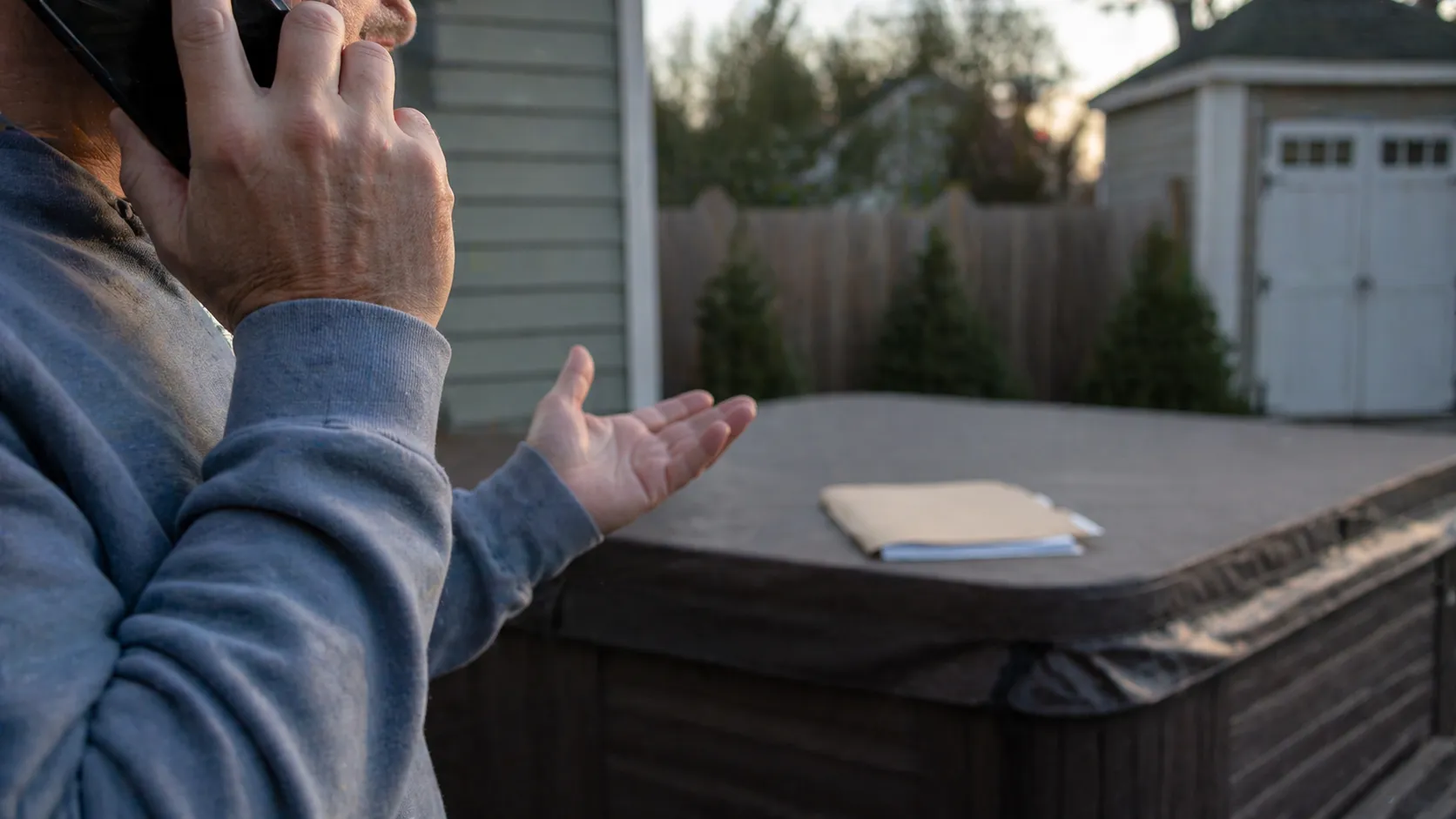
The call usually goes something like this.
"Do you carry filters for [brand X]?"
"I'm sorry, we don't. Did you try the local dealer?"
"Well, I bought it at one of those shows, and I can't find this filter anywhere."
We get some version of that call at least once a month. Swap out "filter" for a jet, a cover, a circuit board, or a pump, and the conversation is the same. By the time someone reaches us, they've usually called half the shops in the Upstate. You can hear it in their voice. And when we suggest they contact the manufacturer directly, there's almost always a small sigh on the other end of the line, because they already know how that's going to go.
We've been selling and servicing hot tubs in the Carolinas for over 37+ years, so we're writing this not as a pitch, but as a warning. Another traveling hot tub expo is rolling through, and if you're thinking about going, we want you to have the information we wish every one of those callers had before they signed the paperwork.
What a traveling expo actually is
A traveling hot tub expo is exactly what it sounds like. A crew rents a convention center or fairgrounds for a weekend, trucks in a warehouse worth of spas, advertises hard on local radio and Facebook, sells as many units as they can in three or four days, and then packs up and drives to the next city.
The marketing leans heavily on words like "national event" and phrasing that suggests multiple top brands are showing up to compete for your business. In practice, the vast majority of these events are staffed and stocked by a single manufacturer or distributor. The "variety" on the floor is usually different model lines from the same factory, dressed up to look like competing brands.
None of that is illegal. But it's worth understanding before you walk in, because the entire pitch is built around the idea that you're comparing independent brands under one roof. You're not.
The part nobody warns you about
Every dealer in the country has written some version of "don't buy at the expo" by now. Most of them focus on the sales tactics: high pressure, inflated MSRPs, phantom discounts, no wet-test, no backyard consultation. All of that is true and worth knowing, but it's not the thing that actually hurts people.
The thing that hurts people shows up six months later, when something breaks.
Hot tubs are machines. Pumps fail. Heaters go out. Covers tear. Filters need replacing every year or so. Control boards don't love lightning strikes. This isn't pessimism. It's just the reality of owning anything with water, electricity, and moving parts sitting outside in a Carolina summer. A well-built hot tub from a reputable brand will run for 15 or 20 years, but it's going to need occasional help to do it, and that help has to come from somewhere.
When you buy from a local dealer, "somewhere" is a phone number you can call, a van that pulls up in your driveway, and parts that are either in stock or a few days out. When you buy from a traveling expo, "somewhere" is a customer service line that may or may not answer, a parts department that may or may not have what you need, and a third-party service network that may or may not exist in your zip code.
If you spend a few minutes on the Better Business Bureau website looking at complaints filed against some of the larger traveling expo operators, a pattern shows up quickly: spa delivered, spa breaks, service request submitted, weeks go by, spa sits unused in the backyard. Phrases like "useless tub sitting in my yard" and "four months without being able to use it" come up with uncomfortable frequency.
That's the sigh we hear on the phone.
Four red flags to watch for before you even walk in
If you're still planning to go, at least go in with your eyes open. These are the things we'd tell our own family to watch for.
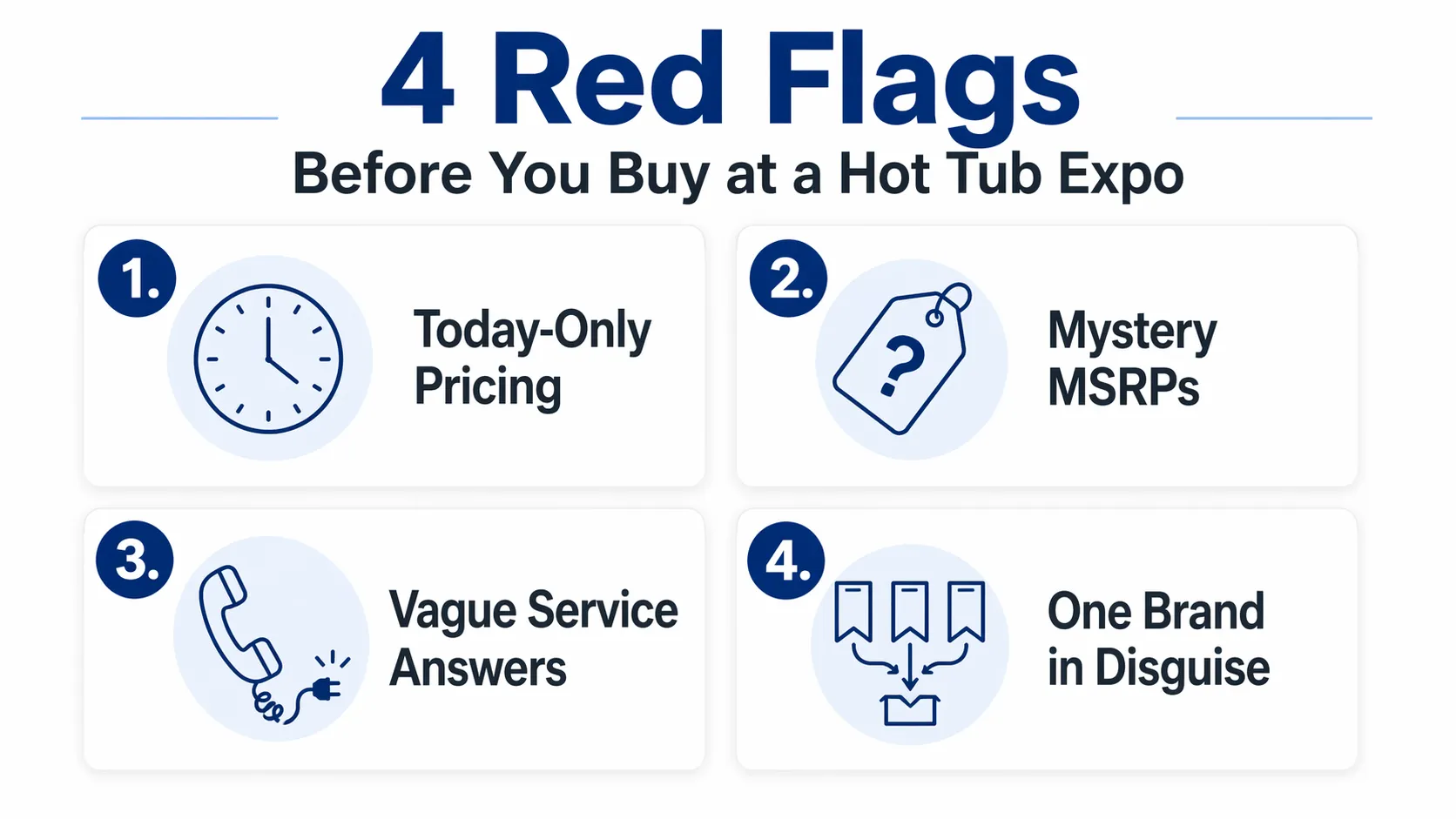
"Today-only" pricing on a major purchase. A good hot tub is a 10-year decision. Any approach that requires you to make it in 90 minutes is designed to bypass the part of your brain that handles careful comparison. A real sale will still be there on Monday.
Discounts measured against mystery MSRPs. "50% off" only means something if you know what the tub actually sells for elsewhere. At an expo, you often can't find that number. When you do get home and look it up, the "sale" price is frequently close to, or even higher than, what the same or a comparable spa sells for at a local dealer.
Vague answers about local service. Ask directly: "If this tub breaks in six months, who comes to my house and how do I reach them?" You want a specific company name, a local phone number, and ideally a service contract in writing. "We work with a network of technicians in your area" is not an answer.
Advertising makes it look like multiple brands getting together but it's only one: Most expo advertising is made to look like a local home show or a bunch of different brands getting together. In reality, it's just one brand traveling from city to city.
Bonus: The deposit is non refundable.
When an expo actually is fine
Not every event with hot tubs in it is a trap, and we don't want to scare anyone off a legitimate opportunity. The distinction worth making is between a traveling blowout expo and a local home show.
Regional home shows, county fairs, and pool-and-spa shows that feature real local dealers with real brick-and-mortar showrooms in your area are generally fine. Those dealers are there to introduce themselves to new customers. They'll be there on Monday, and the month after that, and the year after that, because their business depends on it.
A traveling blowout is different. It sets up in a city where it has no storefront, no service trucks, no history, and no plans to come back except maybe once a year to do it again. That's the one to be careful with.
The questions to ask yourself before you sign anything
Before you hand anyone a deposit, whether it's us, a local competitor, or an expo vendor, answer these honestly:
- If this tub breaks in two years, do I know exactly who to call, and can I find that person in five minutes?
- Has anyone ever gotten in this specific spa with the jets running, or am I buying based on a dry-sit and a salesperson's description?
- Do I know what comparable hot tubs sell for elsewhere, or am I trusting the "discount" I was shown on the floor?
- Does the warranty cover parts and labor, and is there a local company authorized to honor it?
- Am I making this decision on my timeline, or on theirs?
If you can't answer most of those clearly, you're not ready to buy yet, regardless of where you're shopping.
Where we land on this
Here's our honest opinion as a family-owned dealer that's been doing this in the Carolinas since 1989.
Shop local. Even if it isn't us.
There are good independent dealers across the Upstate, Western North Carolina, and the Lowcountry. Any of them are a safer bet than a traveling expo, because any of them will still have a phone that rings if your cover rips in year three. We'd genuinely rather see someone buy from a reputable local competitor than end up as one of our sigh-on-the-phone calls a year from now.
That said, if you're in Greenville, Asheville, Franklin, or Charleston and you want to come see hot tubs from Hot Spring, Caldera, Freeflow, or Endless Pools in person, take your time, ask hard questions, and actually sit in one with the water running, we'd love to have you stop by. No pressure, no 90-minute clock, no mystery pricing. Just a conversation about whether a hot tub makes sense for your backyard and which one fits how you'd actually use it.
Contact Us to find out more: Click Here
If you're not local to us, find your nearest independent dealer and go have that same conversation with them. Either way, don't sign anything at the expo you can't un-sign on Monday morning.